
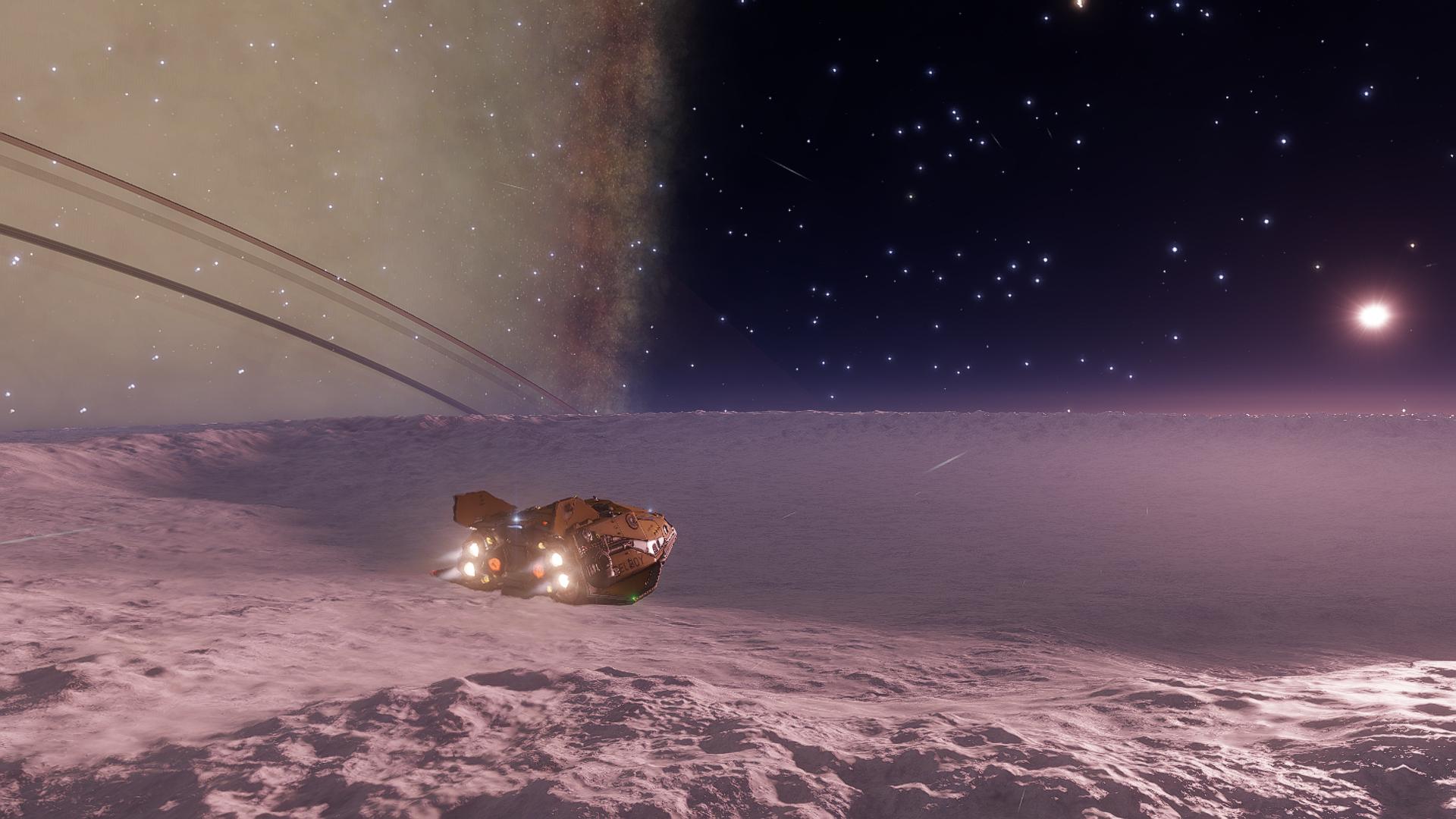
Well, when we last left my voyage, I had begun to send the Esmerelda Weatherwax toward the galactic core and was travelling upwards and downwards of the galactic plane along its path, all the time zeroing in on heavy mass systems after I had learnt how to filter the galaxy map to make them a little more easy to find. Although my ultimate destination after visiting the Collection of Wonders was the mind bogglingly massive black hole at very centre of the galaxy around which every one of those other 400 billion star systems orbit, I decided to visit a stellar phenomena that was a little off to the side before actually heading there.

On the way, however, I continued to search for those misty patches on the galmap that betrayed the location of a heavy mass system, and also for any further black hole systems. Most of the more interesting of these systems turned out to be already discovered and if they weren’t, they would usually be a single super-massive or collection of massive blue white stars with no other bodies present. I was able to discover a few more unvisited black holes though and these are always exciting!
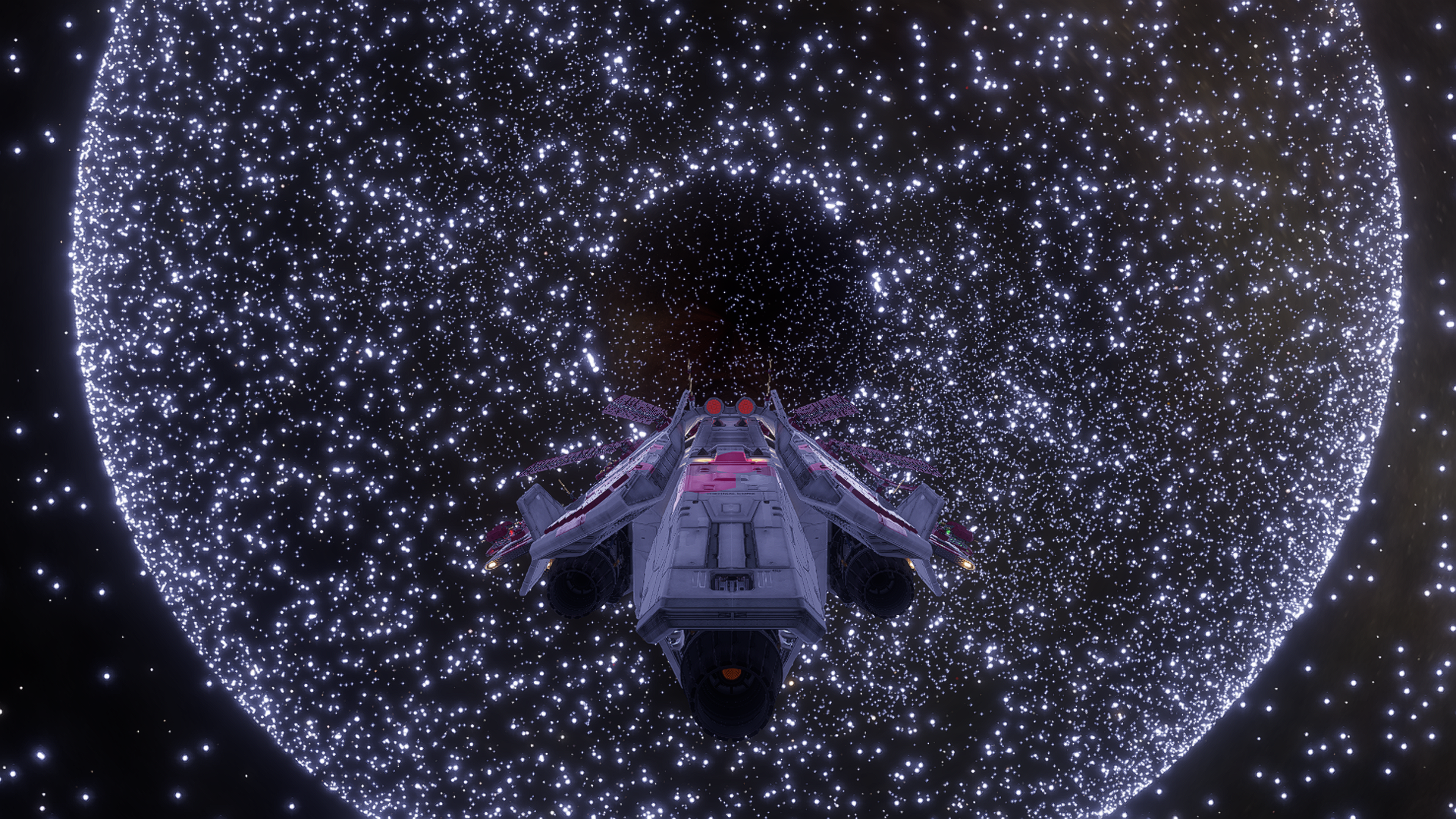
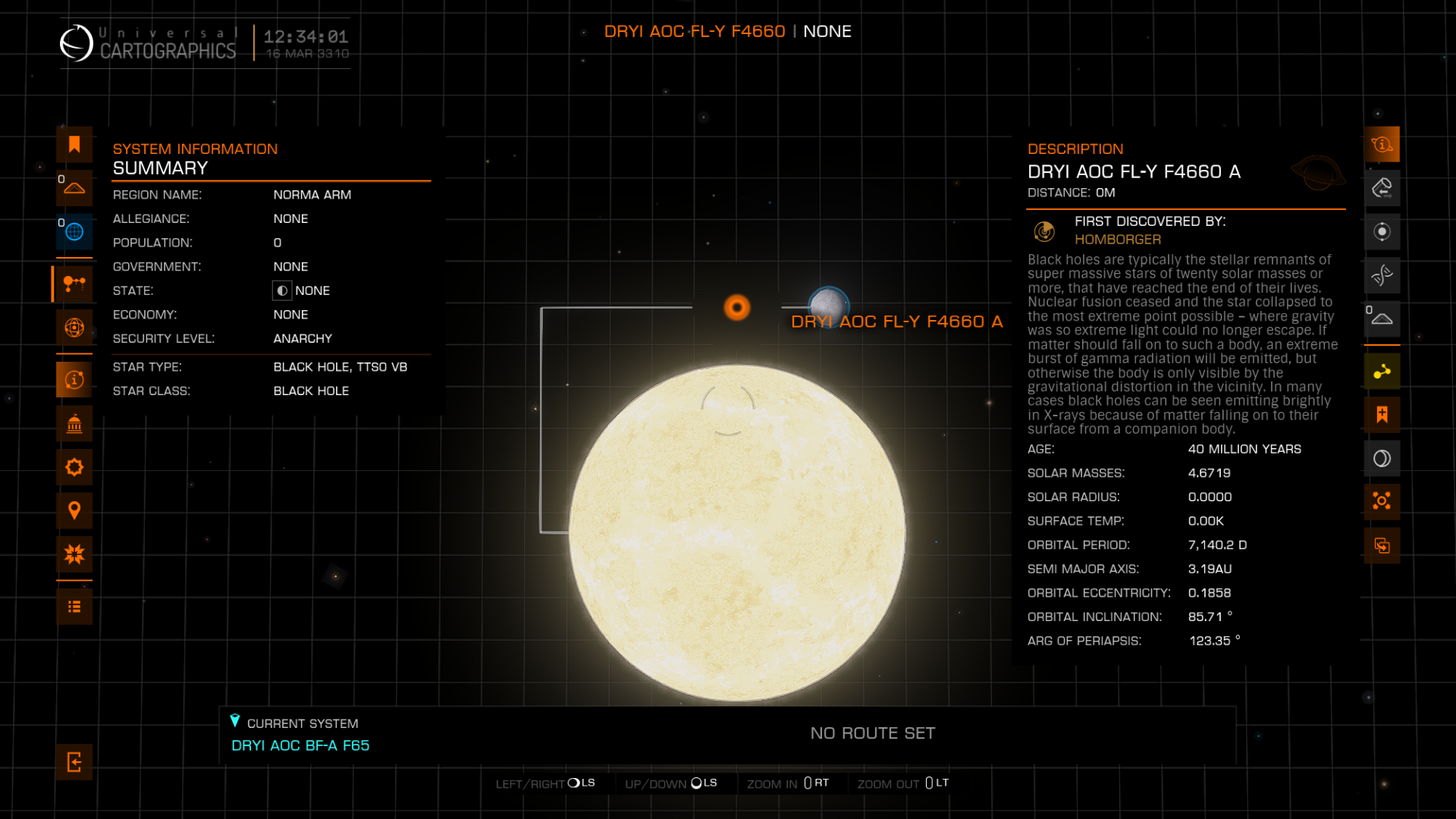
I am also always on the look out for interesting, lucrative and rare biologicals as well. I have to pay for the upkeep of the Weatherwax somehow and I am also going to need to refuel it once I eventually return to Colonia to ready her for the next voyage. I won’t stop for just any old bios, unless I feel like it, of course, or if the body containing the bio signals looks like it might have a really good screenshot opportunity. High metal content worlds, even with a single bio signal are always worth a scan, and a nitrogen world will almost always have the lucrative bacterium informem dotted about. It’s usually one of the easiest bacterium to spot too. I also will check out worlds that contain both biological and geological signals as the fascinating species range of fumerola can regularly be found here, and are well worth a great screenshot if not a good amount of cash as well! But the atmospheres I love the most, oxygen and water, were nowhere to be seen. My last water atmosphere had been way back before I’d even set off from the Bubble when I first began exploring in the Silver Machine.
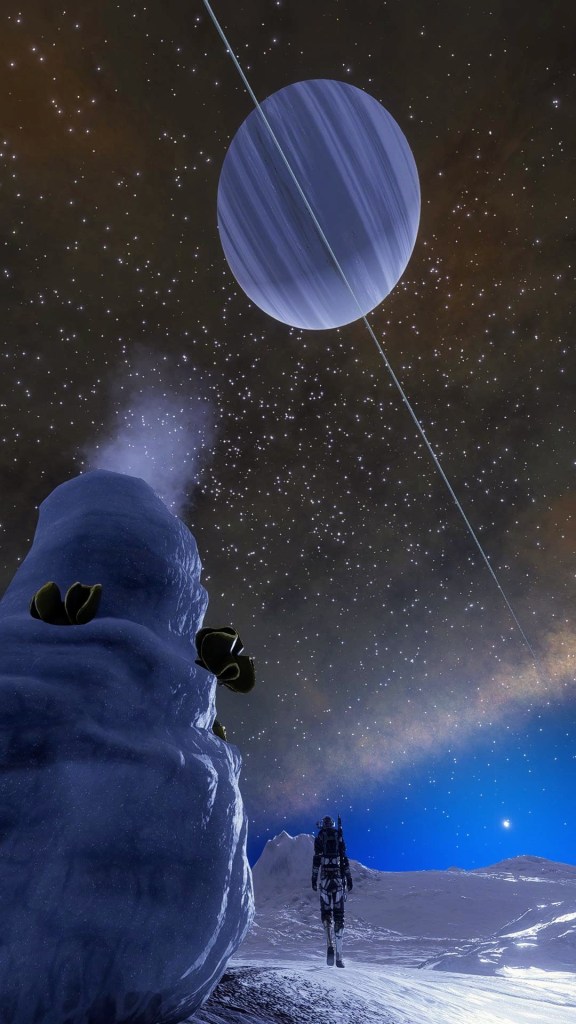
Then there were long stretches, jump after jump after jump where there would be nothing worth investigating and when I reached what I thought might be an interesting system it would not be anywhere near as interesting as I had hoped. It’s times like these when I try using a different ship to try and freshen things up so, after using Hrairoo for a while with it’s enormous jump range I decided to switch back to the Lovely Jubbly. Now I have stated that I use Elite Observatory to help me find interesting bodies that I may have otherwise overlooked whilst jumping from system to system and it was this tool that highlighted a pretty rare and stunning cosmic phenomena.
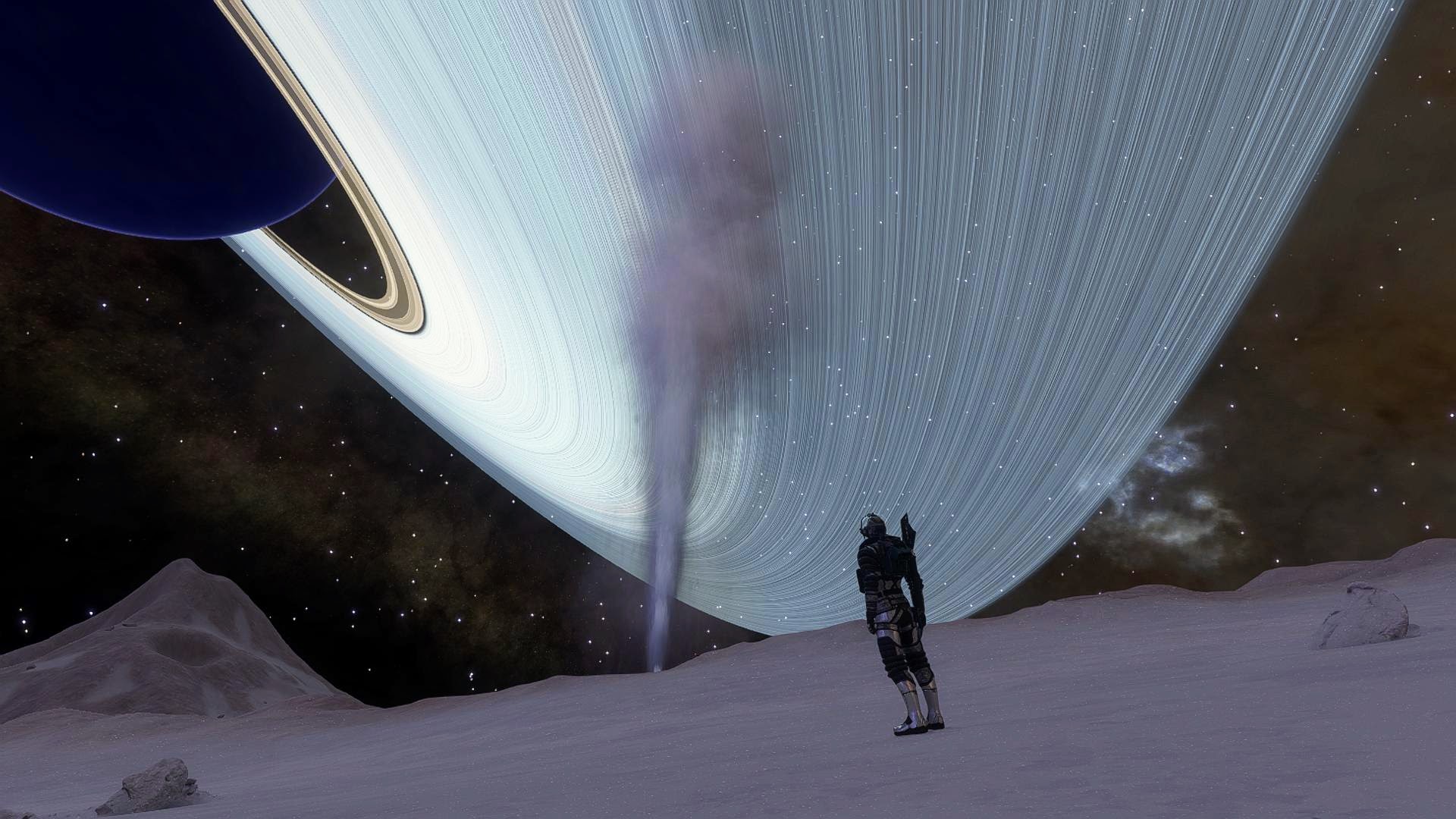
A very close orbiting body around a ringed gas giant that orbited at almost ninety degrees to the rings. As you can see it made for quite a spectacular screenshot and, had I the patience and the time could have waited a few hours and taken a far more impressive one. Such a pity it didn’t have an atmosphere as well! Still, it was a spectacular place to find. Now Elite Observatory doesn’t usually have a criteria to find planets like this but I found that if a moon orbiting a ringed gas giant has an inclined orbit it makes for quite spectacular screenshots. Elite Observatory has a custom option where you can insert code to find your own criteria. Someone on one of the Elite Dangerous Facebook pages very kindly pointed me to this code. I just had to create a notebook file, paste in the code, save and put down the file’s location in the provided box in the EDO “core” section below the custom criteria.
In case you would like to use this with your version of EDO then the code is as follows:
::Proximity::
scan.Landable and scan.DistanceFromArrivalLS < 20
;the only problem with this is that it won’t detect close proximity planets around companion stars
;using semi-major access also triggers for moons around planets which I don’t want
::Criteria::
if scan.Landable and scan.OrbitalInclination > 5 and scan.OrbitalPeriod < 2600000 and parents then
if parents[0].Scan and parents[0].ParentType == ‘Planet’ and parents[0].Scan.Rings then
return true, ‘Inclined Moon’, ”
end
end
::End::
::Criteria::
if scan.Landable and scan.OrbitalInclination < -5 and scan.OrbitalPeriod < 2600000 and parents then
if parents[0].Scan and parents[0].ParentType == ‘Planet’ and parents[0].Scan.Rings then
return true, ‘Inclined Moon’, ”
end
end
::End::
For what seemed like the longest time after this system however, I couldn’t seem to stumble upon any discoveries of note at all, no matter how high or low above the galactic plain I travelled. I did find a few non atmospherics with bio signals though and when I visited the first of these I suddenly realised where I was.
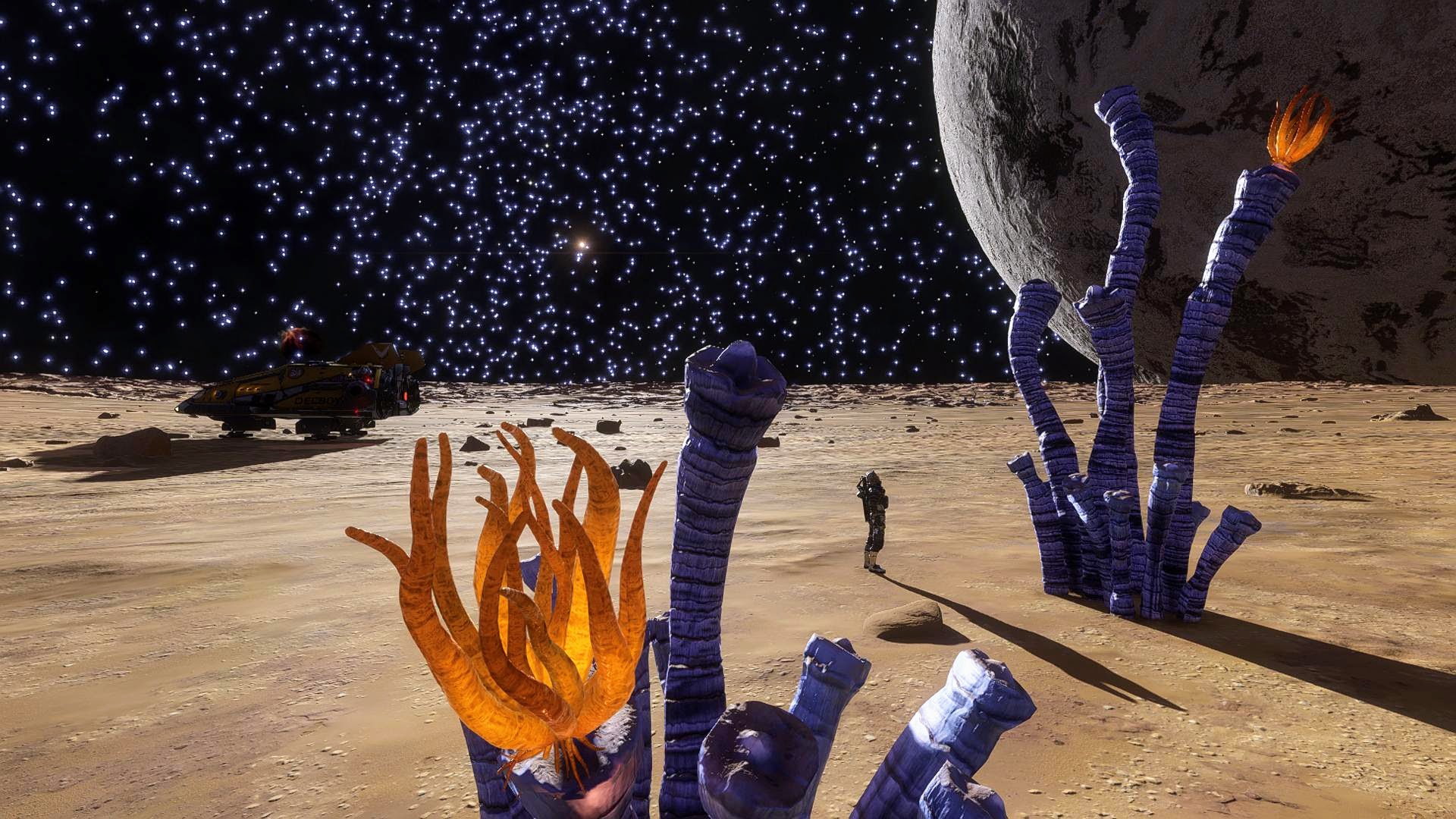
Sinuous Tubers! I last time I saw these was at the system where I met Cmdr Commander Picard (almost two years ago to this day as I write). They seem to be rather numerous in this region of the Galaxy. And that system wasn’t too far away either. I toyed with the idea of returning there, but there was a far greater prize to be savoured!
It wasn’t long before I arrived at the system I was heading for – Shrogaae KK-A d2672.

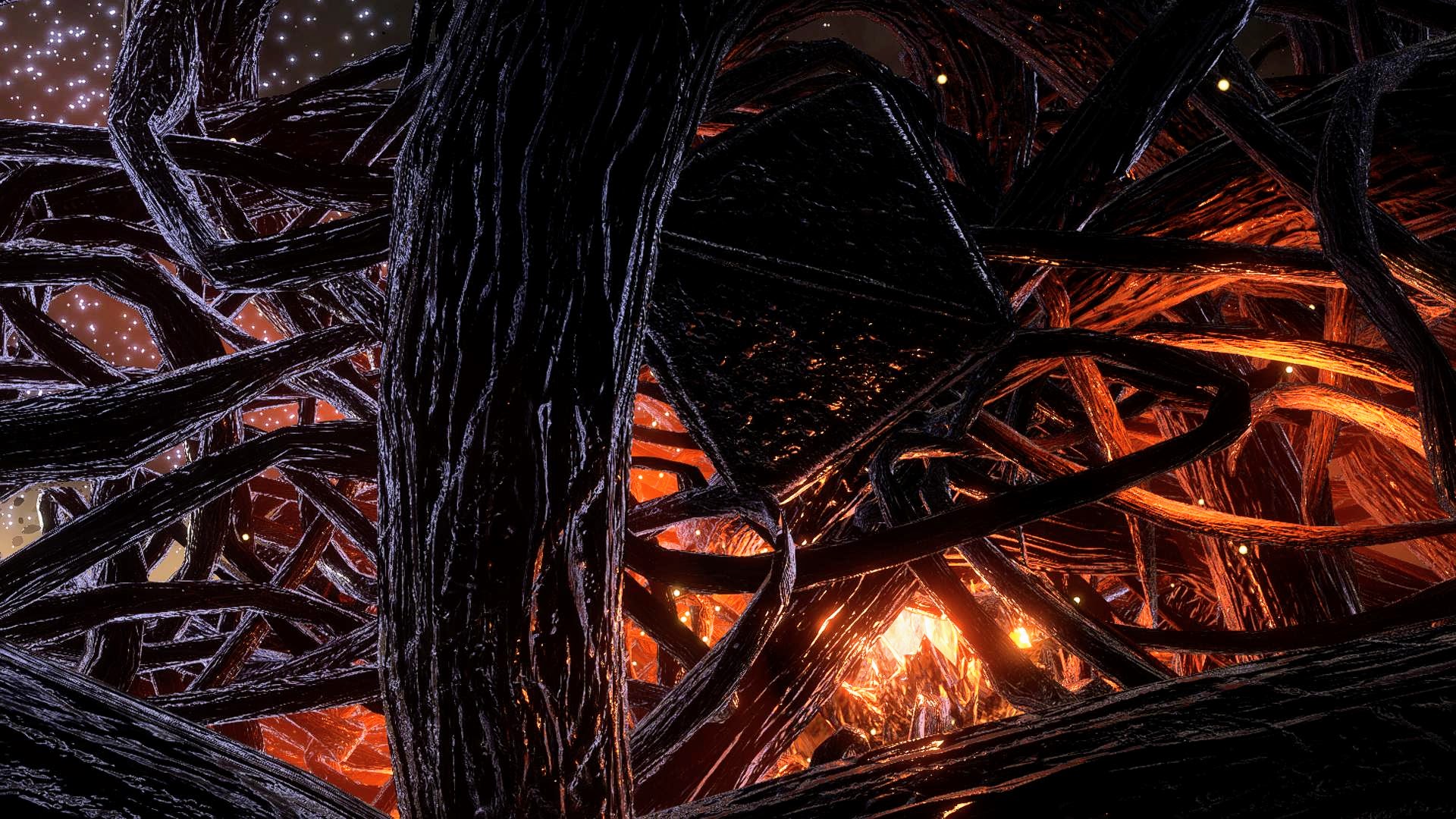
If you’ve been here before you know what a special system this is. It is one of only three systems (so far discovered) where the notable stellar phenomena known as Void Hearts can be found. Arguably one of the most breath-taking NSP’s in the galaxy! A twisted yet mesmerising mess of bramble like knots that spin gracefully and crackle spookily, emanating a ghostly, fiery radiance pulsating like a pulmonary light show. I just hung there for what seemed like an age, hypnotised by their beauty.
I can’t entreat you all enough that you come out here and visit these marvels!
Tearing myself away, it was time to head for the centre. For the middle of everything. The supermassive black hole around which everything in the Milky Way pivots – Sagittarius A*
(the ” * ” is important – never forget to mention it!)
The trip to the galactic centre now seemed to take forever. I kept to my usual method of sending the carrier straight on while the Jubbly searched for interesting systems above and below the Weatherwax‘s direct route. Discovering lots of lonely black holes or black holes with very distant orbiting stars or the usual heavy mass systems containing one to four blue giants. It was beginning to get a little monotonous. Any really interesting systems I found had already been visited. But I did find one very interesting system and, even though it had been discovered, contained several tenuous atmospheric worlds orbiting brown dwarfs that were themselves orbiting a black hole.
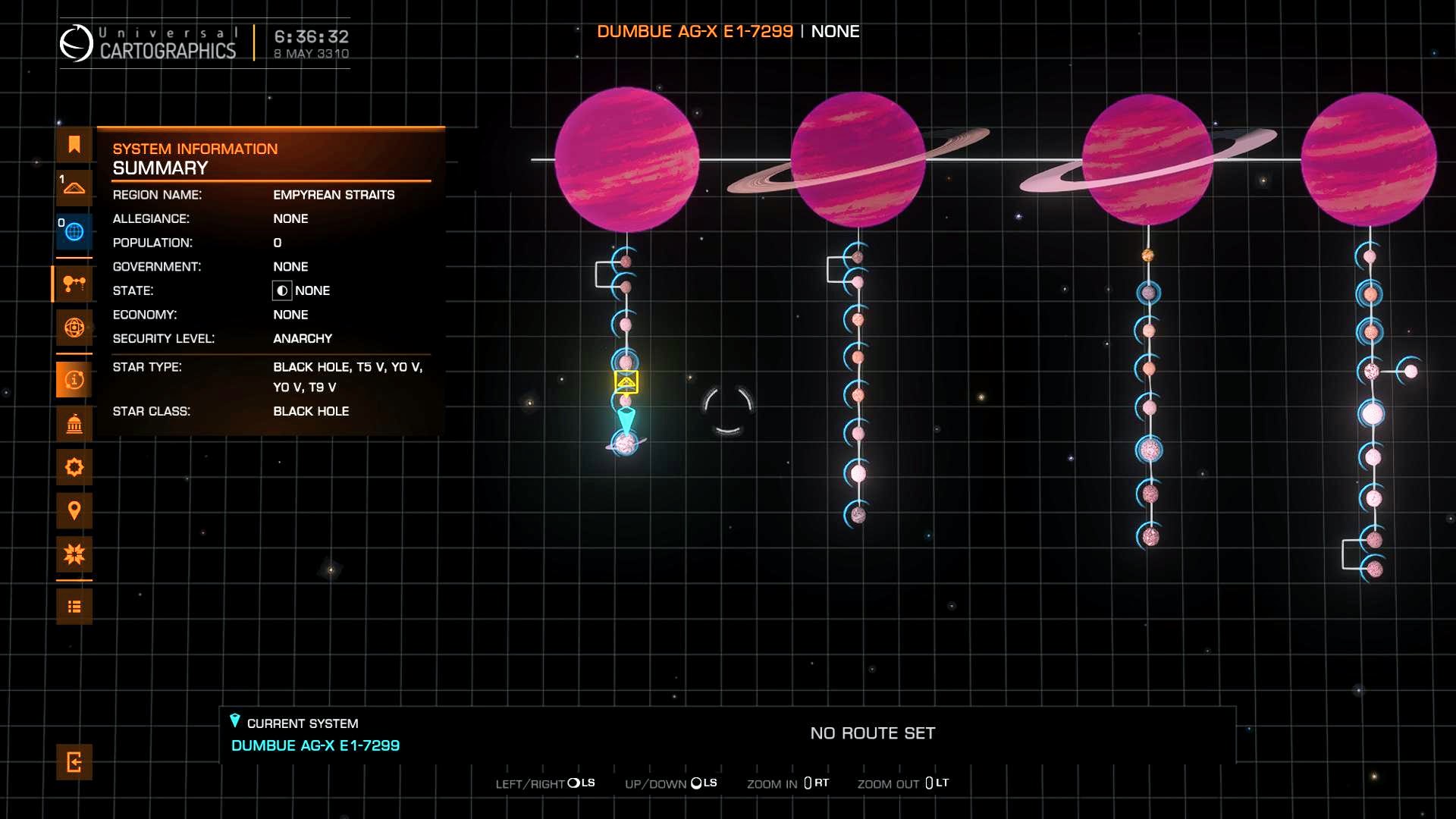
Because the main star is a black hole the only light illuminating these bodies is from their parent brown dwarf, and because these brown dwarfs are taking the place of gas giants, their orbiting bodies are much closer than tends to be the case in a lone brown dwarf system. This gives the lighting on the atmospheric bodies a unique quality.
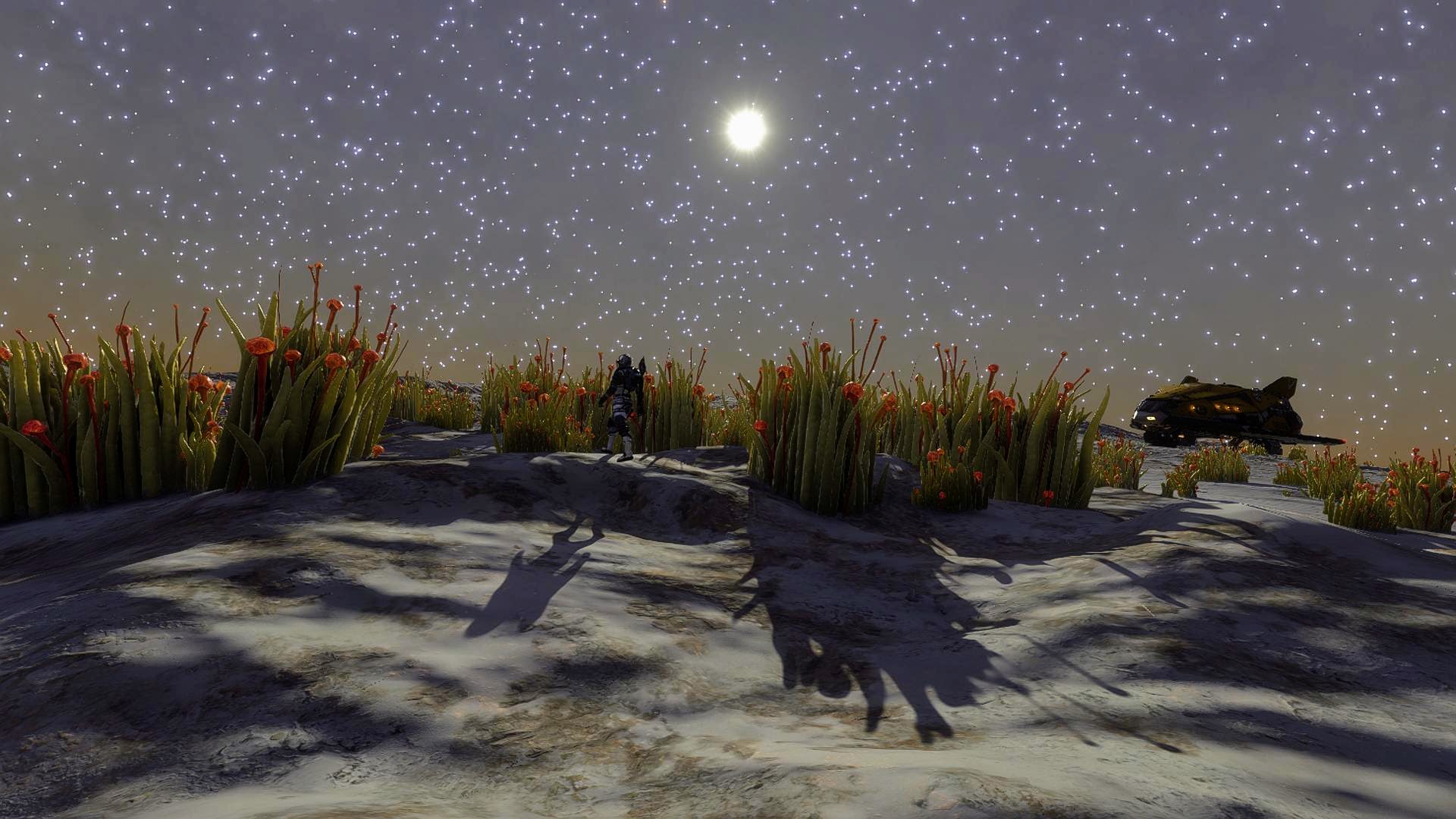
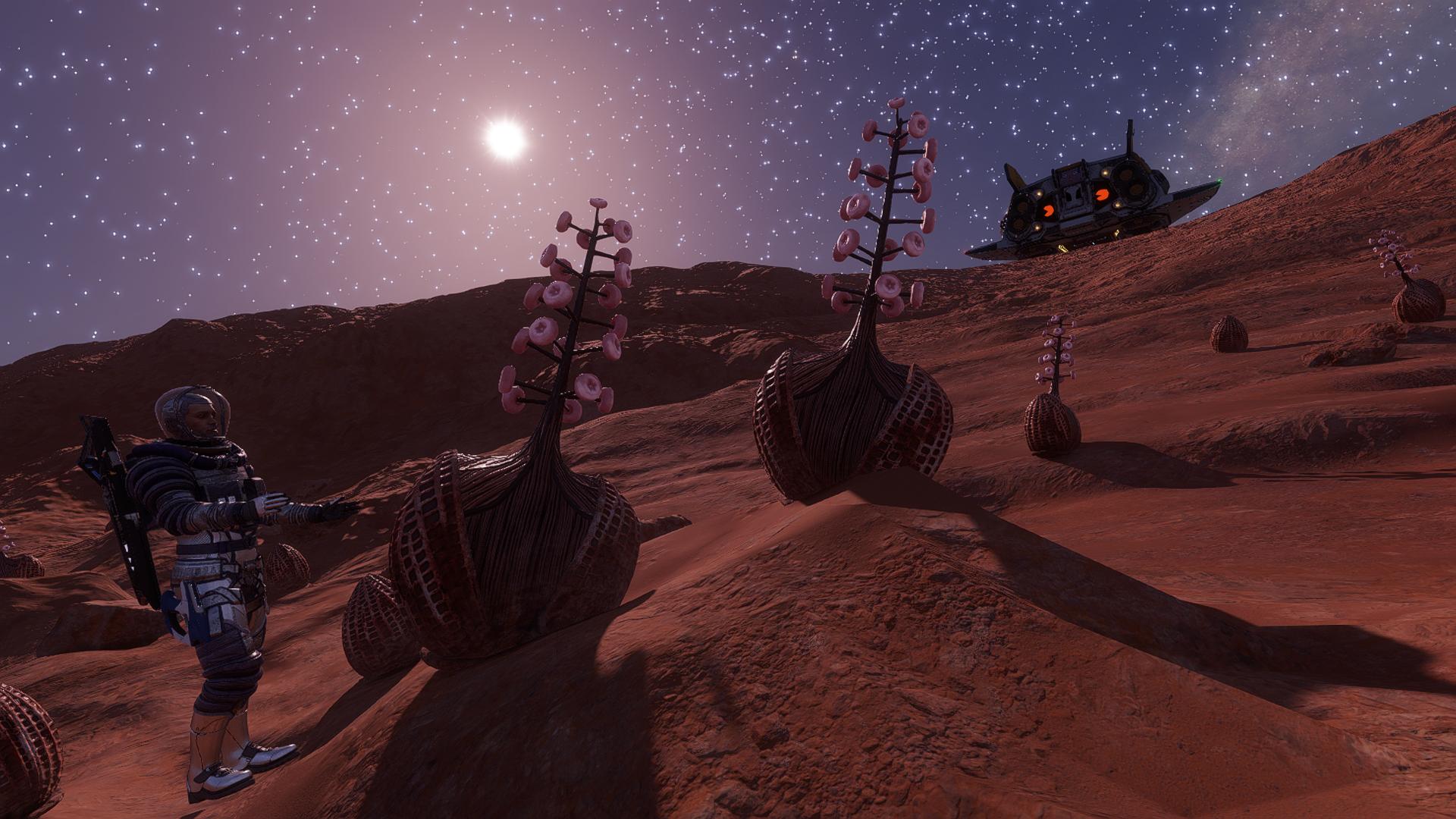
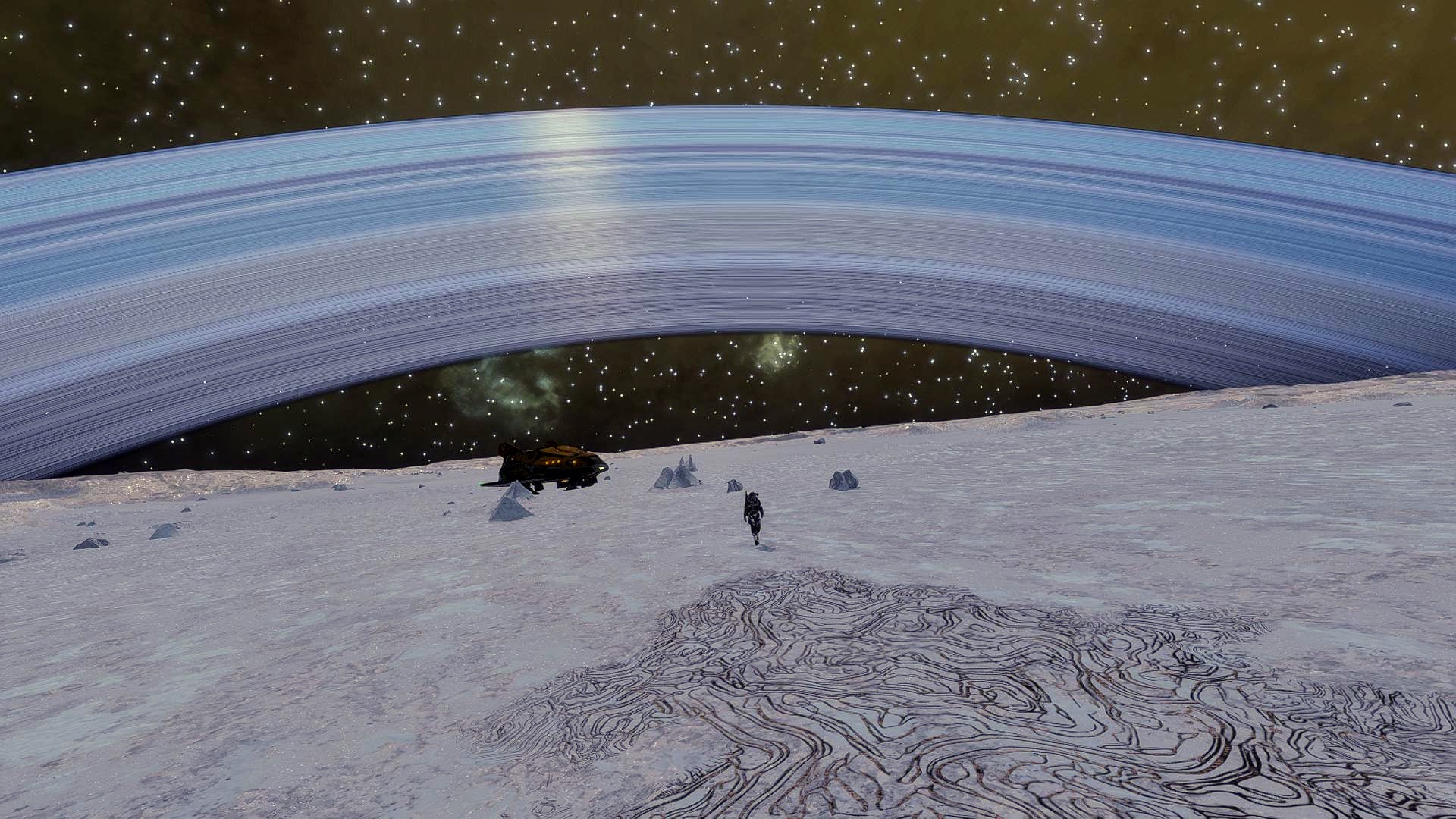
Spent quite a while exploring around this system, acquiring first footfall on all the atmospherics, and getting first scan on all the biologicals. The highlight, however, had to be the ringed neon moon.
I decided to give the Jubbly a rest and swapped her for the Silver Machine instead. As much as I love the Jubbly the Silver Machine is faster, has a much better view from the cockpit (I like to gaze upwards as I pass under stars whilst fuel scooping), and looks amazing in screenshots! As the Weatherwax continued on for the next few thousand light years it was now the Silver Machine‘s turn to search for undiscovered wonders!
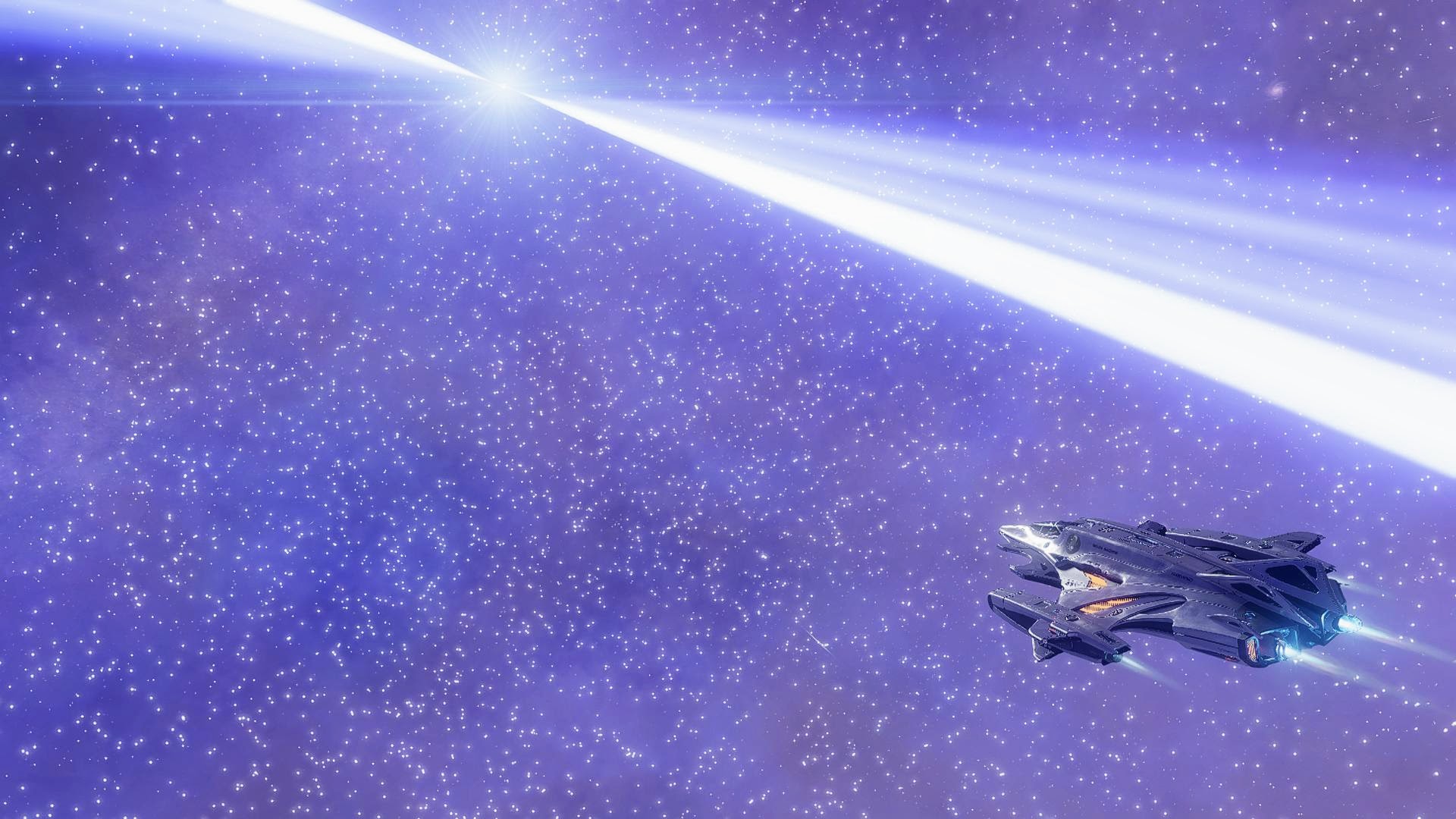
Demoralizingly, however, most of the wonders I eagerly raced toward had already been visited. I found a few planetary nebulae and, of course, although stunningly beautiful, each still had another commander’s name attached. I must have flown for thousands of light years up and down along the route and dare I say it, exploring was becoming more than a tad frustrating. Not even finding an undiscovered oxygen world could brighten my mood.
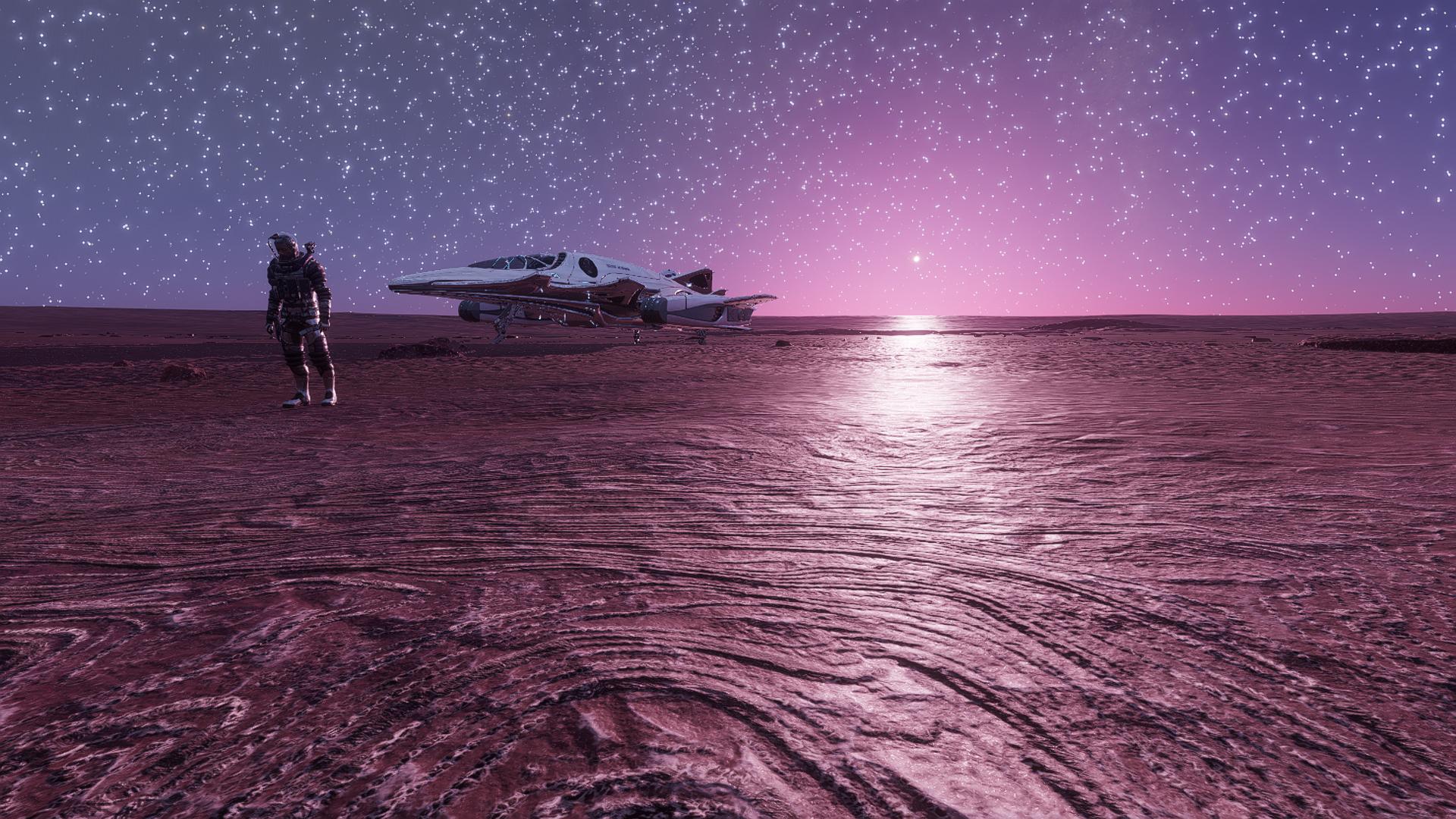
There was a….curiosity though. A body that con only be explained by a rare misstep of the procedural generation system…
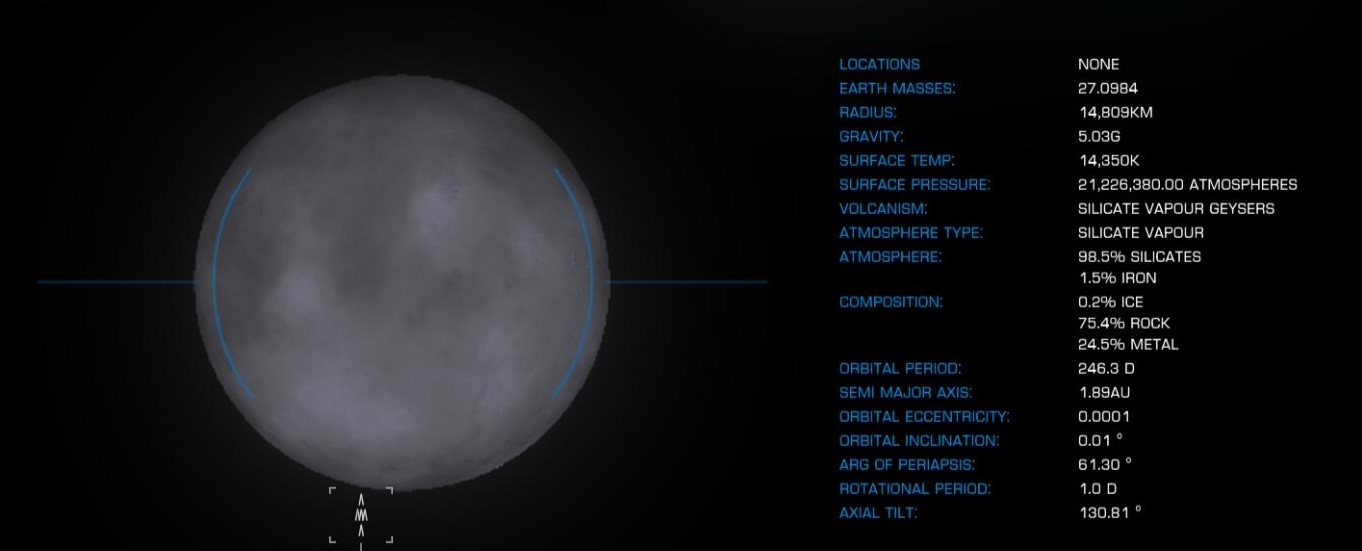
Over fourteen thousand Kelvin? And a surface pressure of over twenty one MILLION times that of Earth?
Dear Braben!
I decided to take a break. Buckyballing came in tremendously useful here, as did downloading and playing Cyberpunk 2077. Now Buckyballing I’m really enjoying and getting back into. It’s tremendous fun, and even more fun to write about (my blog posts are mostly Buckyball reports) but before long I began to tire of Cyberpunk and the exploration itch was becoming too maddening to ignore!
Logging back in, I realized I was about to cross from the Emprean Straits (the region just outside the Galactic Centre see the ED Astrometrics Interactive Map and have a play around) into the Galactic Centre itself. The carrier only needed to make a handful of jumps before she reached her iconic destination. I stored the Silver Machine and climbed back aboard the Jubbly once more. I really missed the way she handles! How nimble she is around the surface of planets. I decided, seeing as the galaxy is at its thickest here, to just travel up. Up and up as far as I could fly. Calling in on any unusual systems along the way.
But just going...up.
I homed in on any rare star types on the way, first discovering a fair few more black holes before finding another field of white dwarfs and neutron stars that appeared to carry on up forever. And then a star turned up in the galmap that I completely did not expect. I plotted to it, and after a few dozen jumps finally arrived at the system.
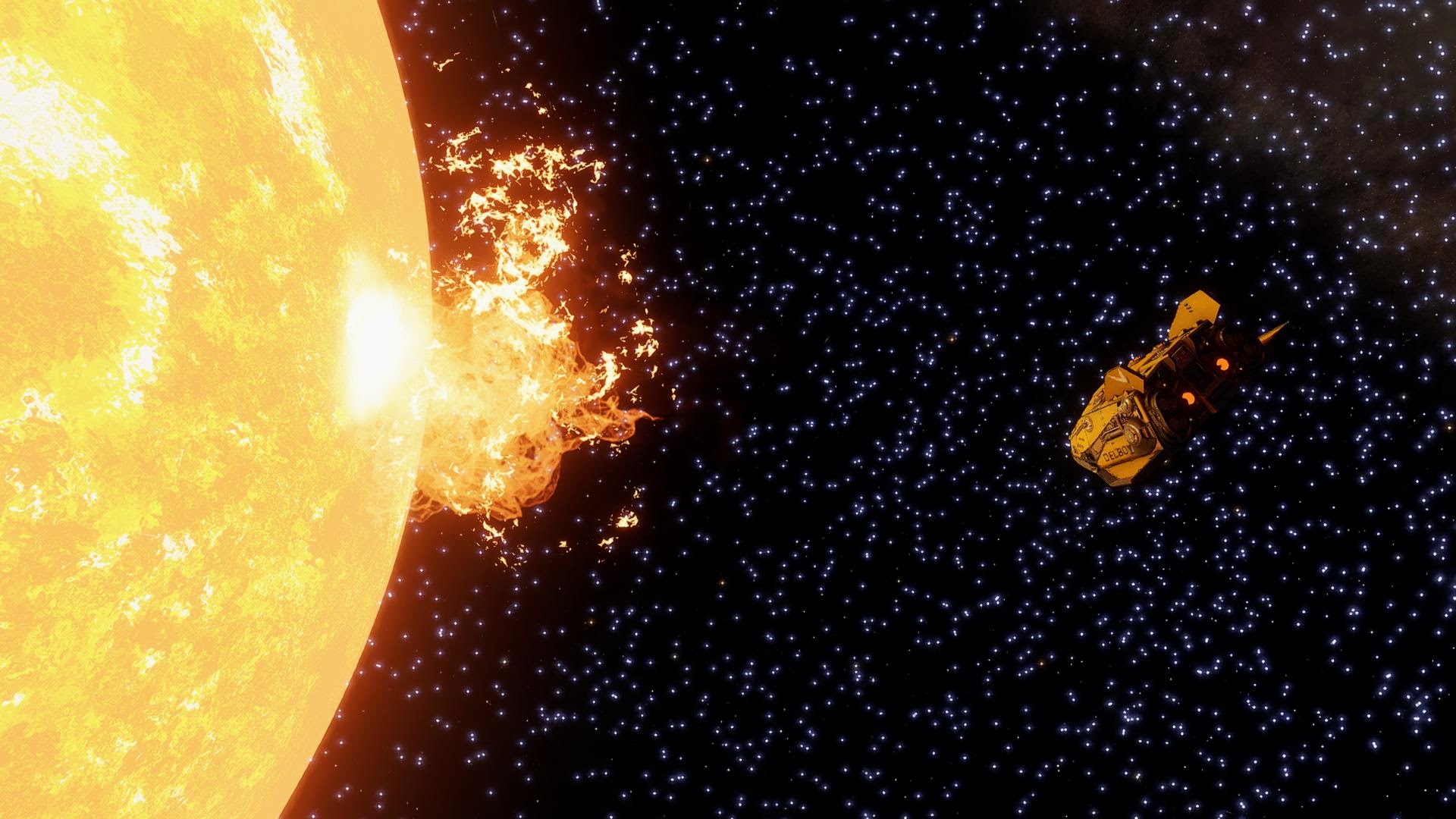
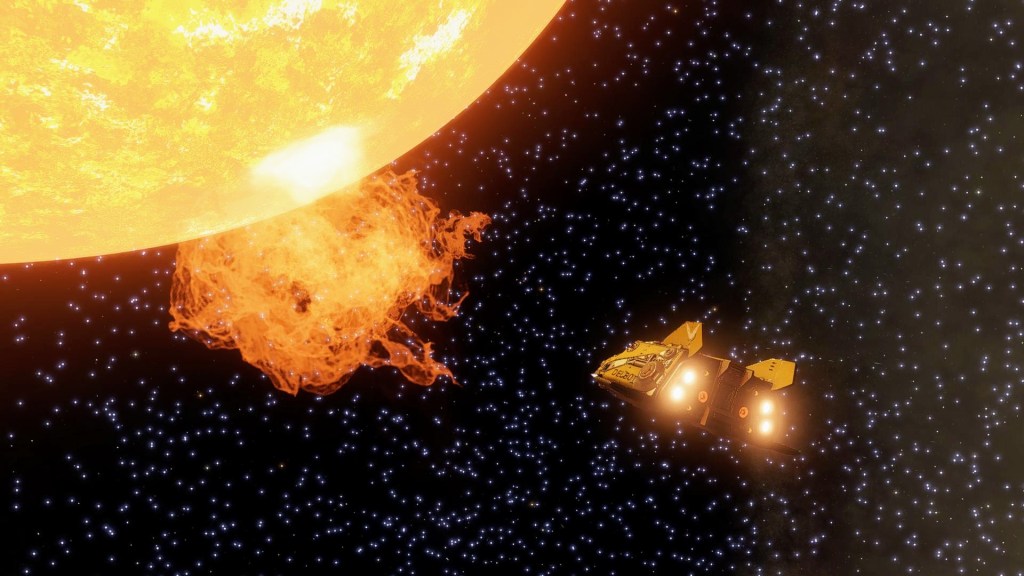
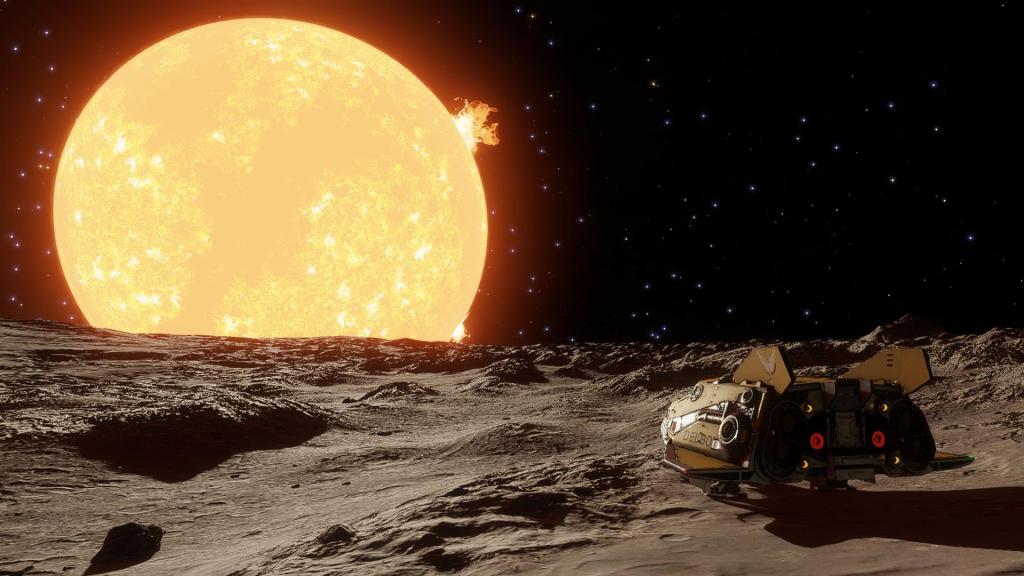
It was a giant carbon star! And not only that, I was the first one here! It didn’t look all that different to most k or m class stars apart from the seemingly higher rate of flares erupting from the surface, sometimes as much as four or five at a time! Although, frustratingly, this never happened while I was waiting to take a screenshot.
I discovered two more of these, one of which had a relatively close orbiting non-atmospheric body. So I landed just on the light side of the terminator so I could watch the flares erupting on the horizon. It’s something I can highly recommend if you’ve not tried this before!
And then I carried on. Flying up.
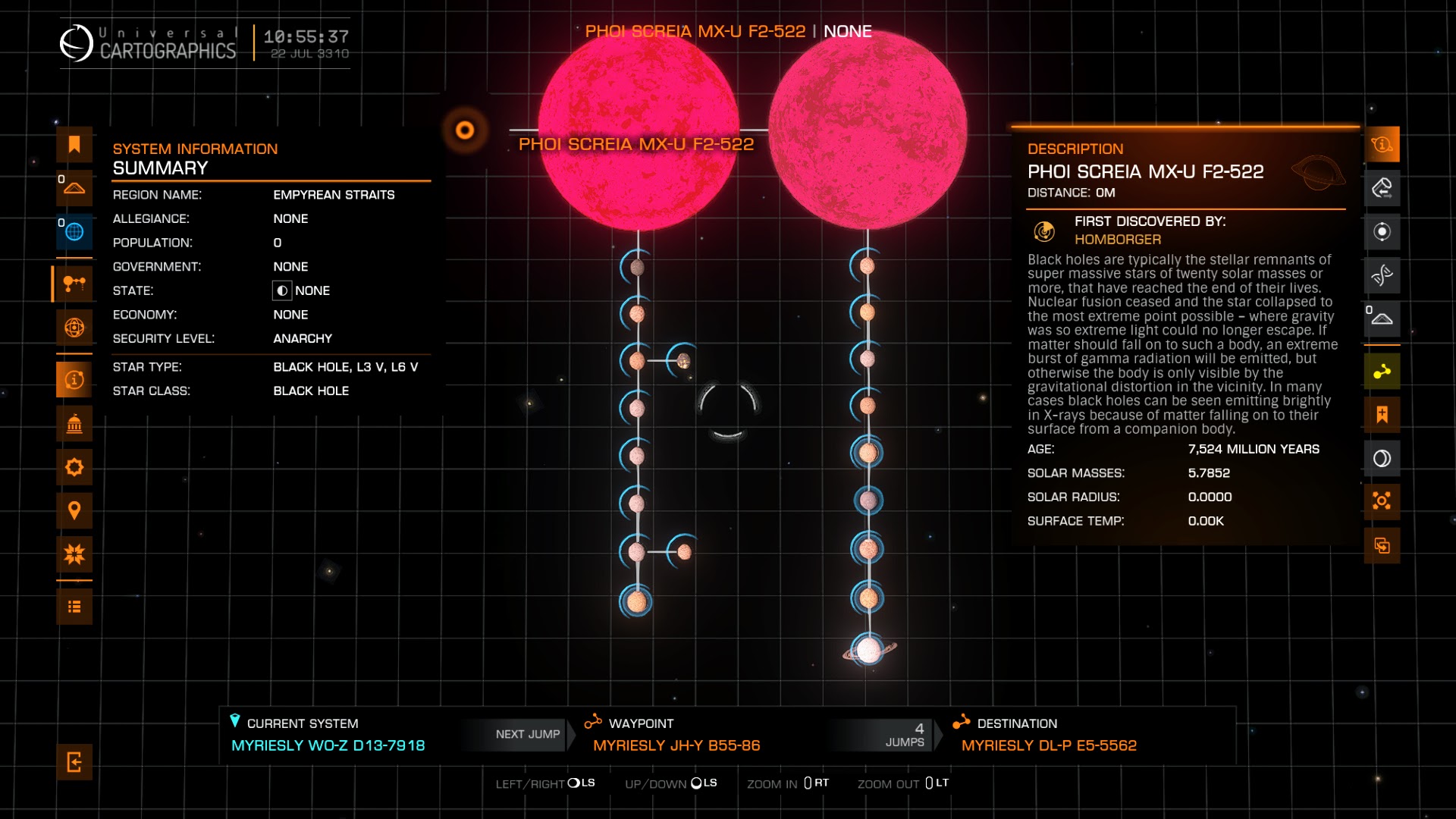
Almost at the very top, way after the WD/Neutron field had fallen away I found an f mass black hole system. So, inevitably, I made for it. To my delight, it had not yet been visited. And to my utter delight, it had some wonderful bodies to explore!
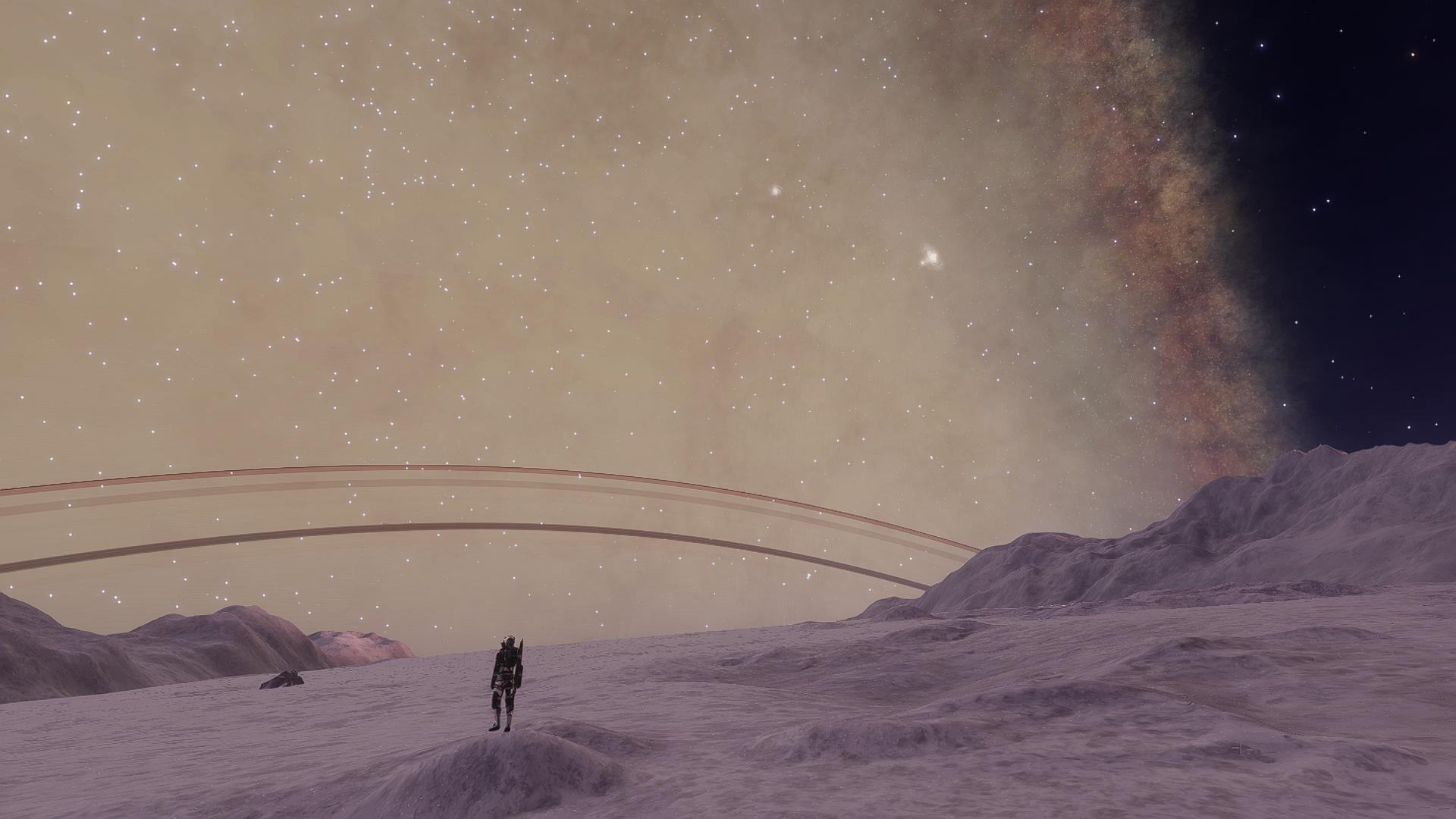
There I found a beautiful, ringed, neon atmospheric world, with a stunning purple sunset. I stood on a small mound and gazed down at the galactic core, over three thousand light years below. I’m telling you, commanders, there isn’t a single video game around that can give you sights like this!
Only a few jumps left before I could travel no higher. I doubted I would find anything interesting up there but, as it turned out, I was rather pleasantly surprised! I managed to find something I’d been hoping to find since I left for Colonia during the spring of last year.
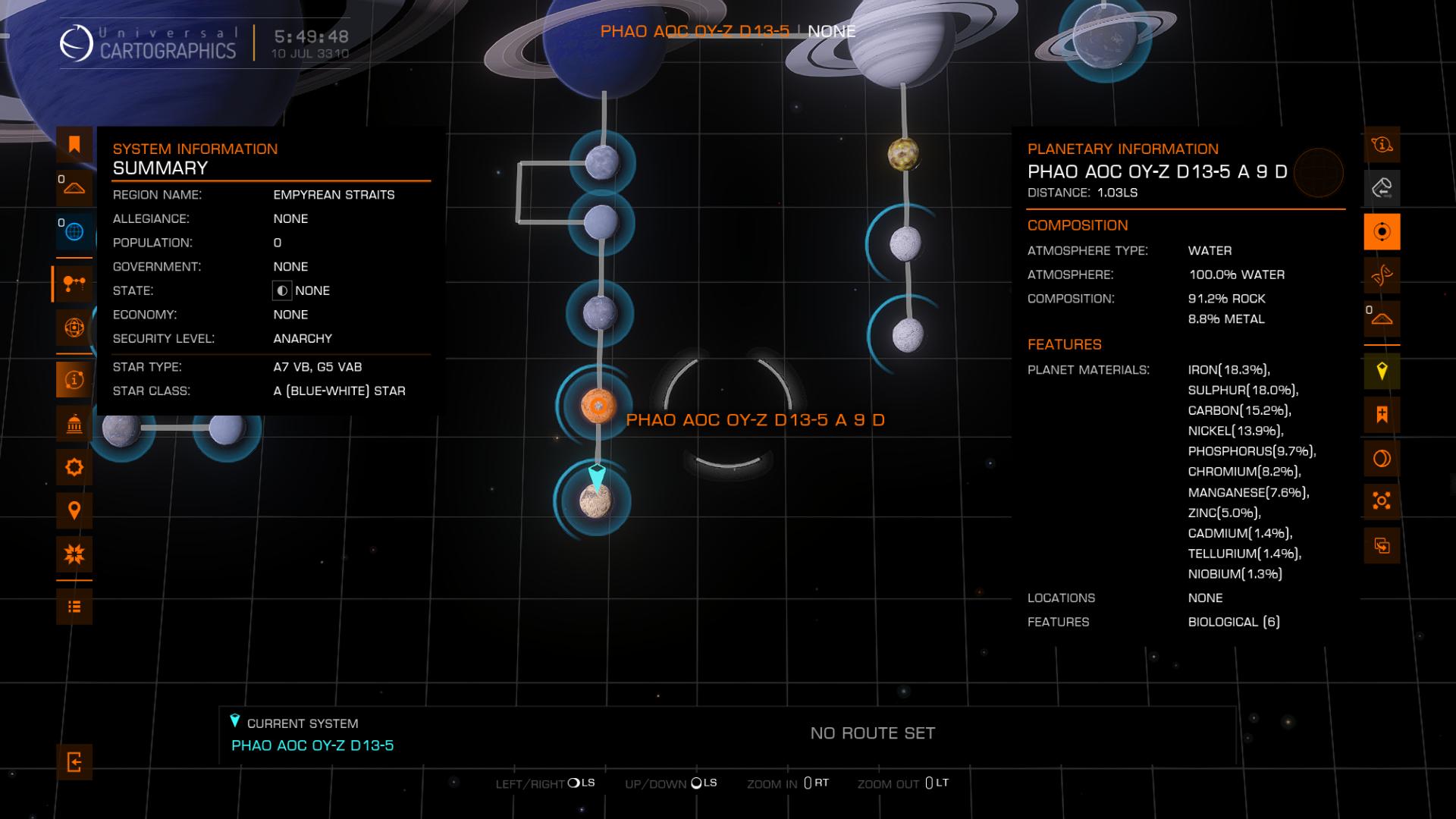
A system containing two water atmospheres!
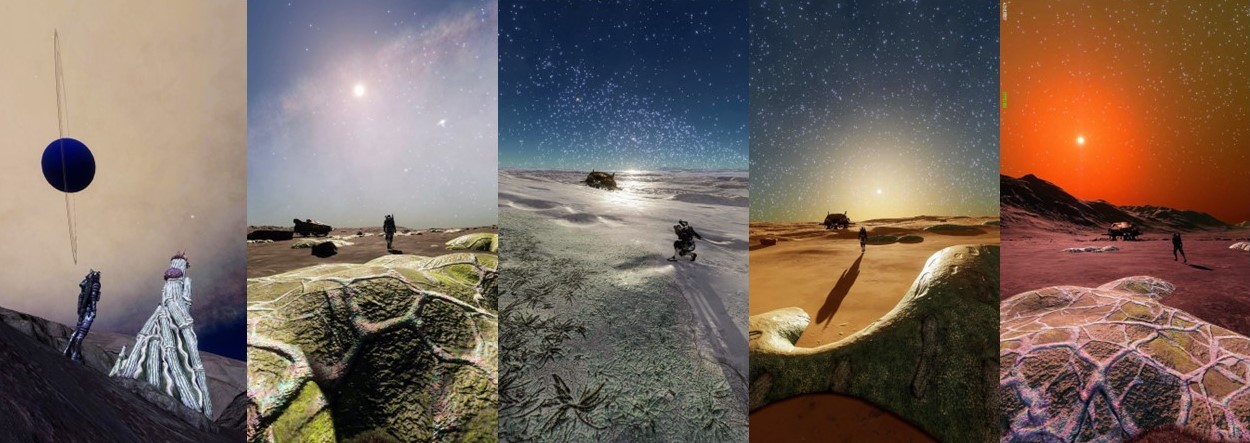
Now, when we’re talking about tenuous atmospheres that comprise of one hundred percent water they are always (so far for me, at least) small, potato shaped bodies with surface temperatures of over one hundred degrees Celsius.
These aren’t so much water atmospheres as steam atmospheres. And, as many people don’t realise, steam is a colourless gas. It only looks cloudy because as it enters our atmosphere from, say, a kettle spout or an engine funnel, it forms water vapour as it cools. But a tiny bit just as it emerges above the funnel, or spout, is completely clear. So, when we visit a body with a water atmosphere, it’s a very low density steam atmosphere!
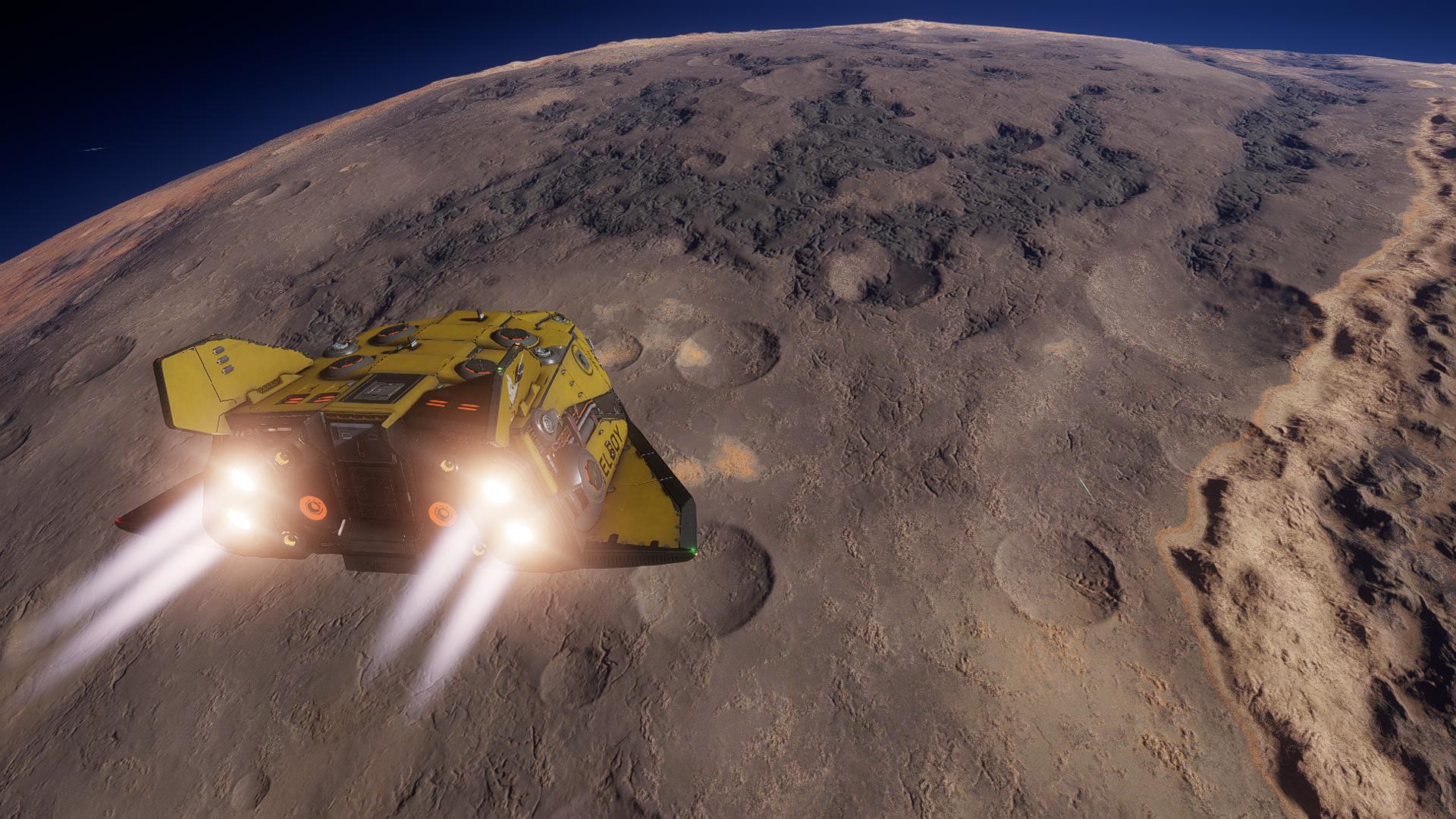
Both bodies had plenty of high value biologicals, scanned by yours truly first of course, one of which I have never come across before.

Osseus Discus! I was over the moon! Or, disc, in this case. Found on both bodies! Made quite a few credits scanning everything here!
By now the carrier had jumped 1500 light years from where I left it so I travelled back there in a straight line and, remembering that I would need lots of money for fuel once I got back to Colonia, decided to scan as many high value bios as I could find on the way.
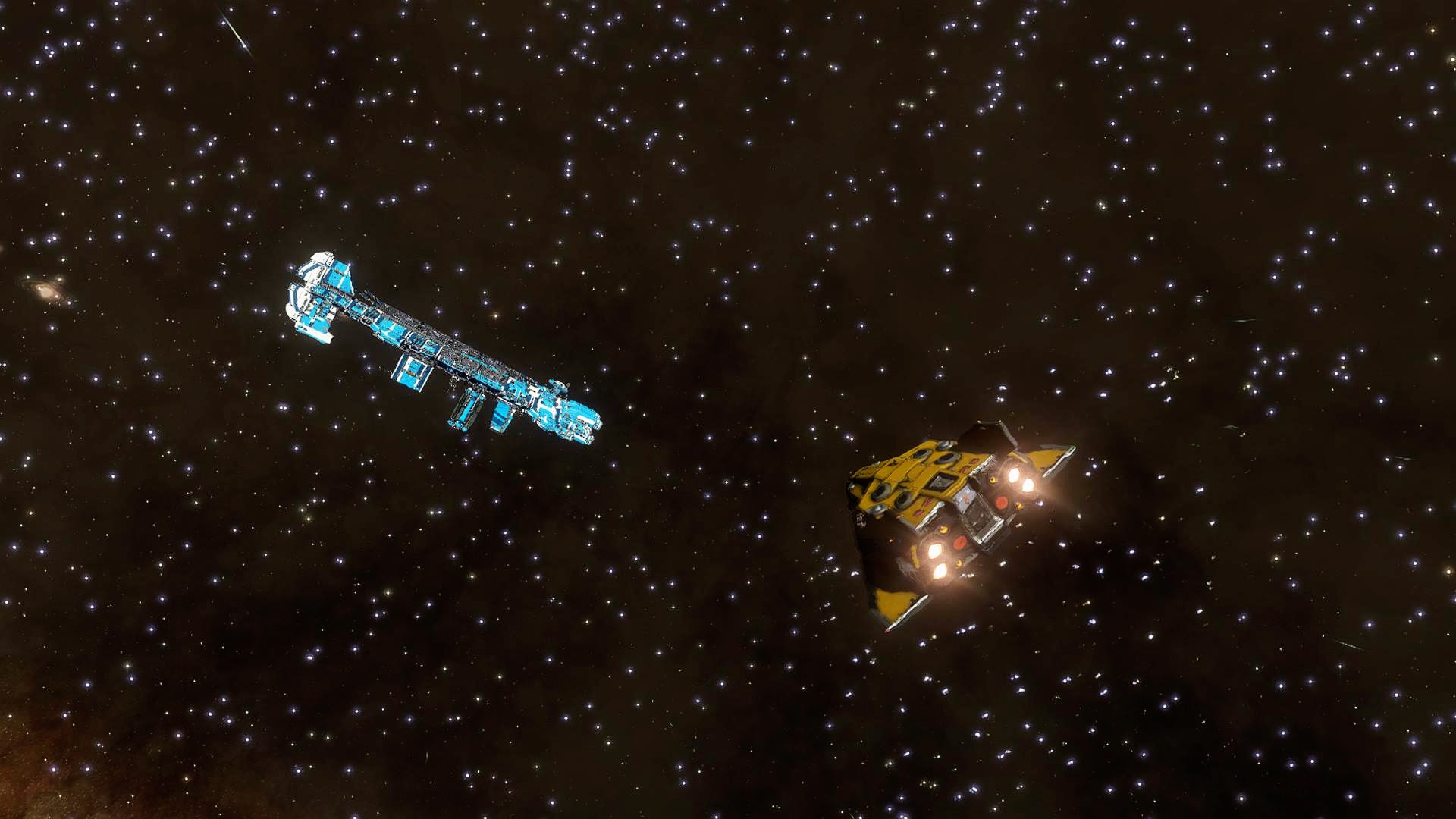
By the time I landed on the Weatherwax I had amassed over a billion credits worth of data, which I dutifully handed in. I checked how far I was from Sagittarius A* and realised, with a small amount of surprise, that the carrier only needed one more jump to reach the supermassive black hole.
But not yet! It was time to go down!
I launched from the carrier, sent her on her way toward Stuemeae FG-Y d7561 (the system where the station Explorers’ Anchorage nestles close to an Earth-like body, where travellers can stay before making the tiny jump to Sagittarius A*) and plotted a route as far down as I could reach.
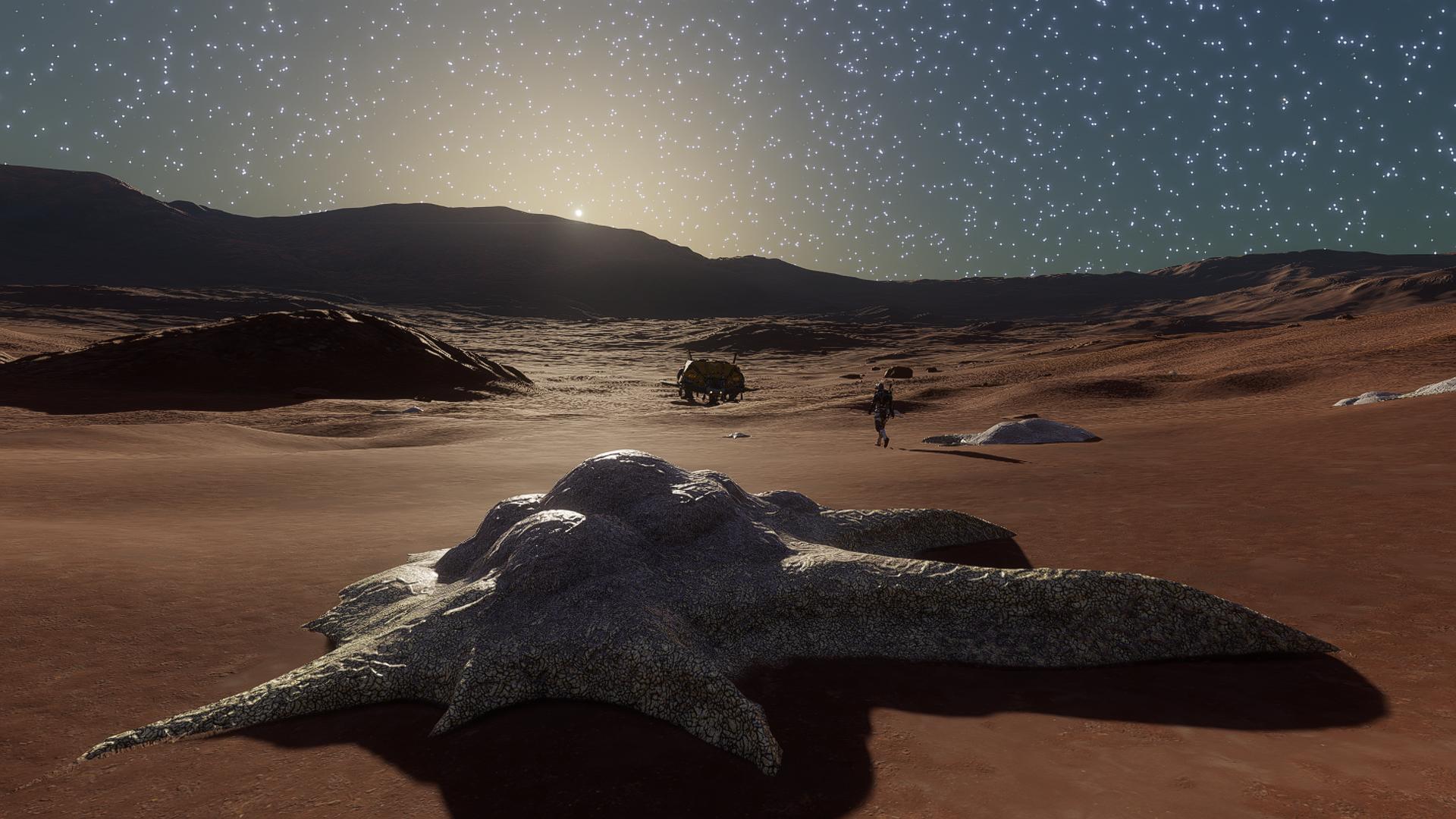
Again I stopped at as many bodies as I could find where I suspected I might discover high value biologicals, but this time, I had help. Remember Elite Dangerous Observatory? Well there as been a “Bioinsights” plugin available for sometime that will predict the sort of bios you might find on a body once you’ve discovered it using the FSS and how much you will net if you scan them. This gets narrowed down further if you use the surface scanner to map the surface of the body and you can then decide if it’s worth your while popping down there or not. All you need to do is have the Observatory Core and then you can download the Bioinsights from here. Once you have the Core up and running and configured it to notify you of exactly what you’re interested in you can download Bioinsights, move it to the desktop or, as I prefer, the taskbar and you’re away.
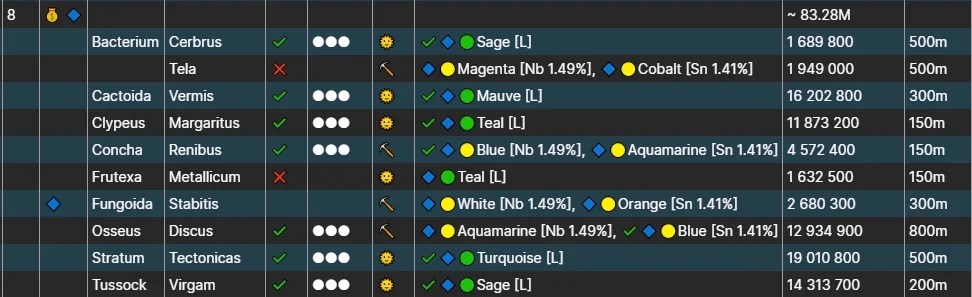
Armed with this, I made a lot more money from bio scanning than normal. But I was also on the look out for spectacular systems to discover. There were a few black hole systems but all the ones I stumbled on had already been visited. As I travelled lower and lower down I began to loose any hope of finding something truly mind blowing. I did happen upon a system with a gas giant that had sixteen bodies in orbit around it. Plenty of bio signals here too but the lure of Sagittarius A* was becoming too strong. I still wanted to reach the bottom but I also wanted to get back up to the carrier as fast as possible. From now on, only the most likely high value bios were worth checking out.

I carried on down, and down until I just could not go any further. I panned down on the galmap and there was nothing. Not even brown dwarfs! Down here there were a few heavy mass class O stars but they had already been visited. I travelled back up a jump or two and landed on the first atmospheric planet I could find to see what I could see.
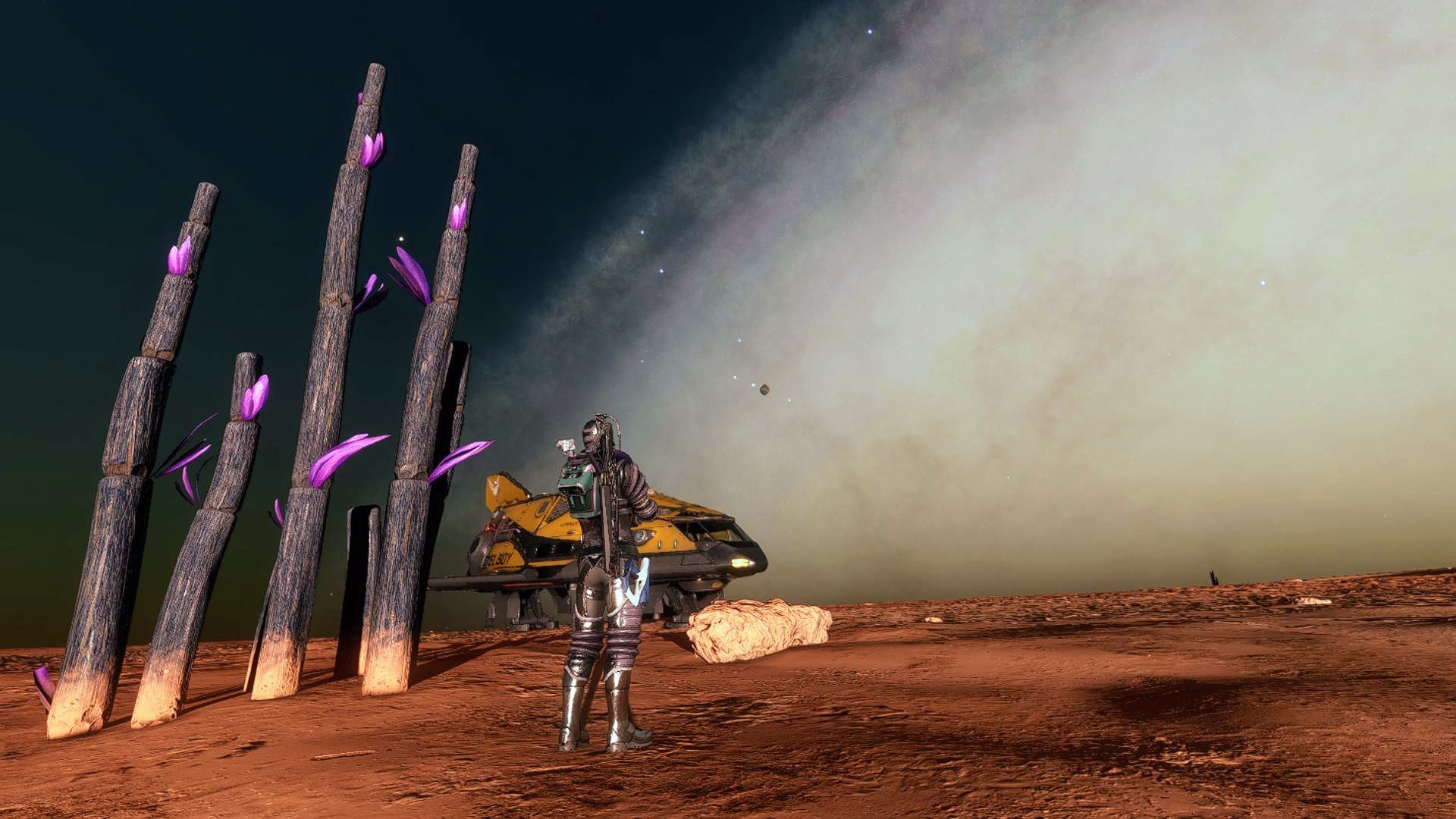
I landed next to some tubus cavas (worth quite a bit) and gazed up at the galactic core. It’s quite a thing to see, all amassed above you like that, with the edges of the galaxy almost hidden by its bulbous bulk of pale, milky white. I took in as much as I could, drank in its splendour, and alighted once more on the Jubbly.
Now I just had to travel back up to the carrier, which by now was waiting patiently near Explorers’ Anchorage. The trip up was startlingly uneventful. A few bio scans, mostly stratum techtonicas but also some more tubus cavas and frutexa flammasis and that was it. Finally I jumped into Stuemeae FG-Y d7561. A close binary pair of a g and k class confronted me. Ignoring them, I turned to Explorers’ Anchorage to drop off my data.
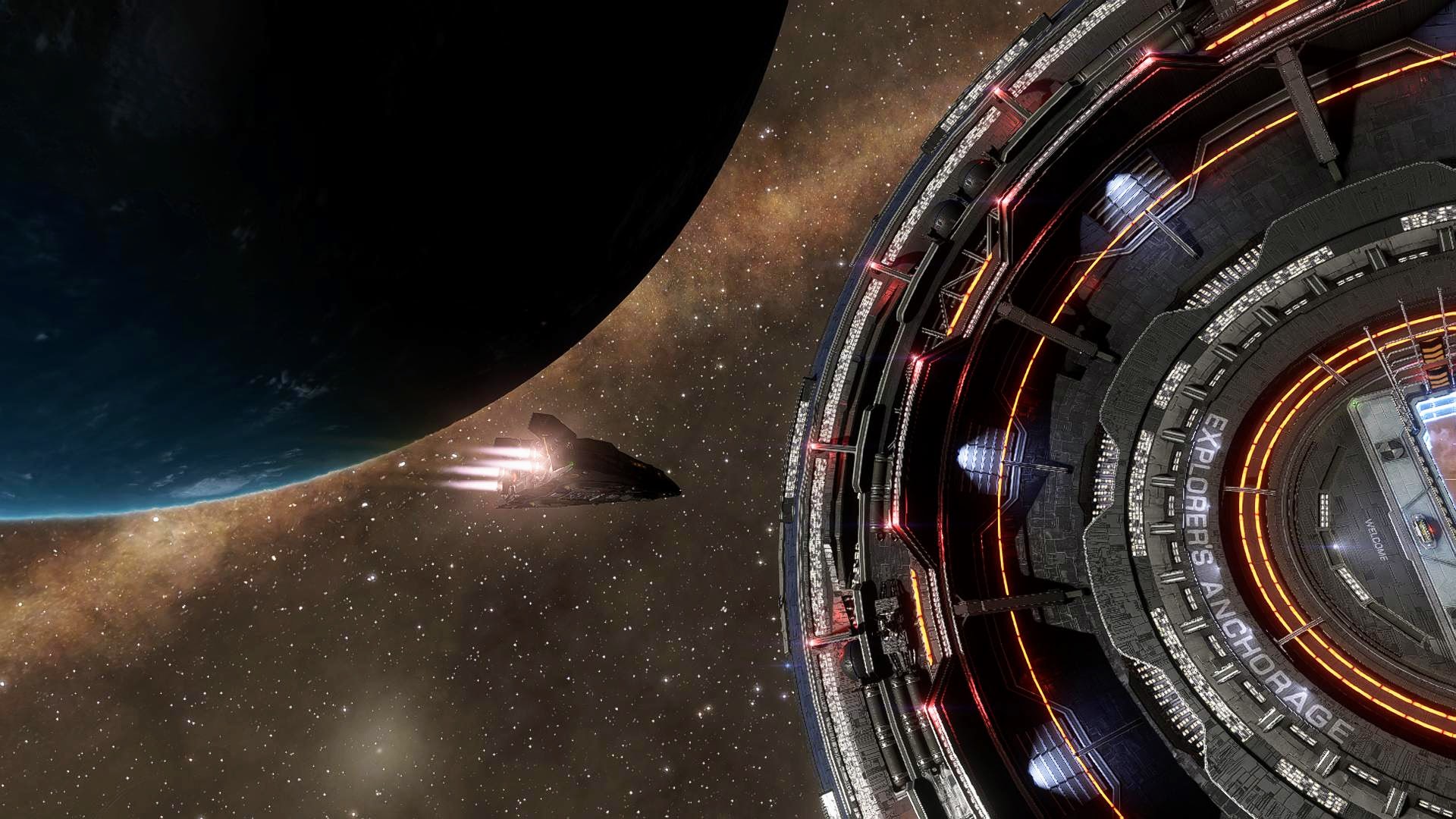
It’s a bit of a dump, to be honest. I expect repairs can take a while. But it’s fine for dropping off data and having a walk around. Once I dropped it off I came back to the ship faced with two fantastic messages!
Elite I exobiology and…


Elite II exploration!
Feeling proud as punch, I left the somewhat dilapidated station and supercruised back to the carrier. But there was a problem…
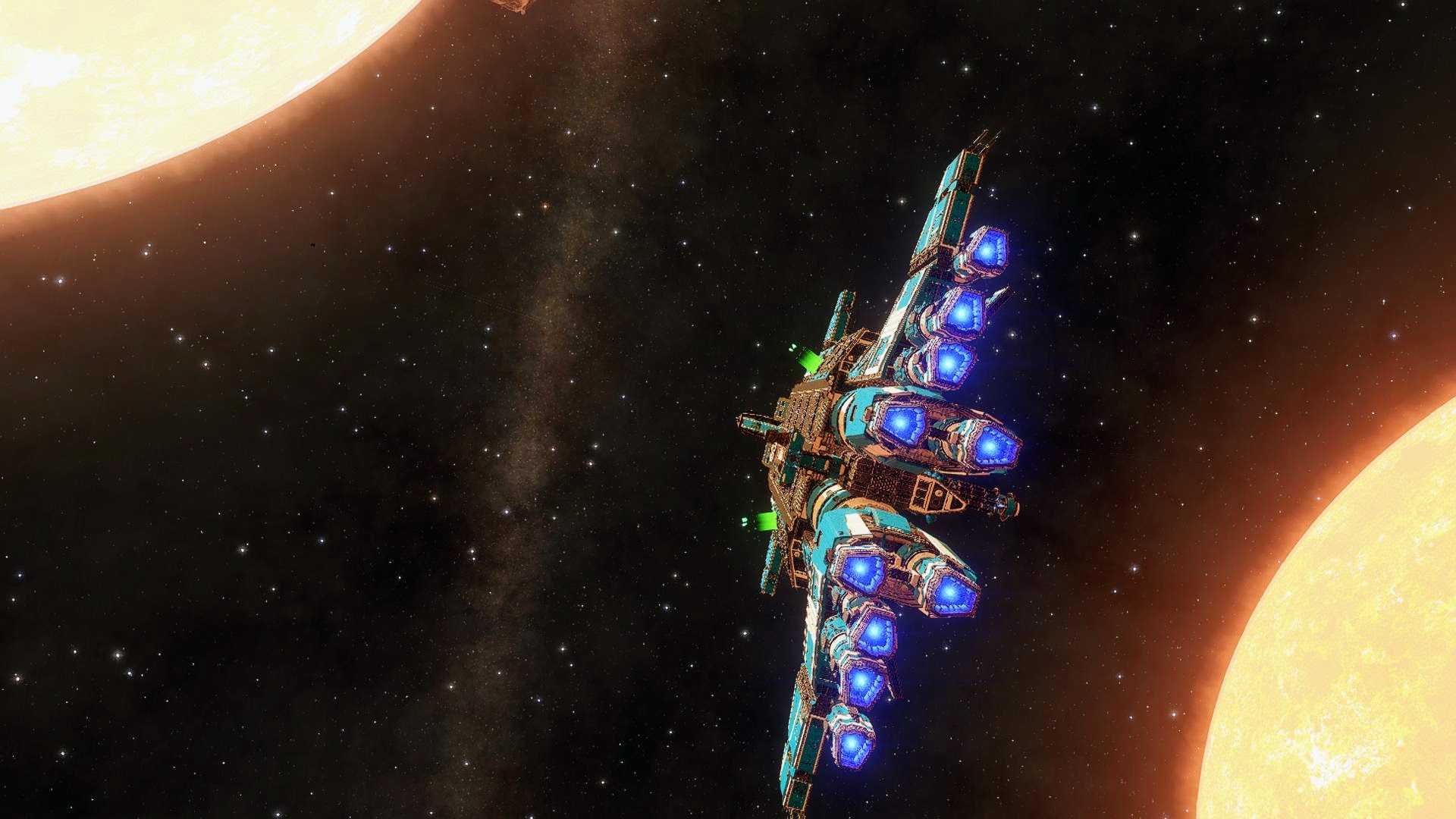
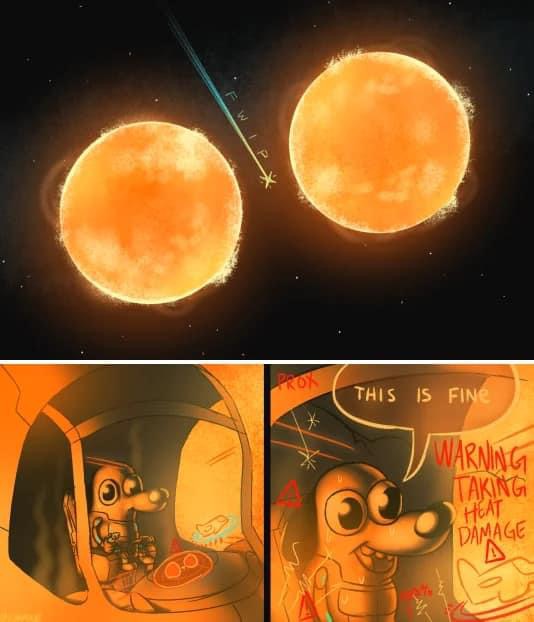
She had berthed herself completely in between the two stars. I could have sent her out to a different system and jumped there but I didn’t have the time, and, by the time I realised this could end my voyage right here I was too committed. The Jubbly, not being the most temperature efficient of ships, began to heat up terrifyingly quickly. I jettisoned a heatsink, then another, and then my last. She was still heating up dangerously as the Weatherwax inched ever so slowly closer. Finally, with the temperature gauge at 170%, and most of my modules melting away into vapour, I fell out of supercruise and hurried toward the carrier.
Landed. Repaired. Let go of the breath I didn’t realise I’d been holding the entire time.
And swapped to the Palomino for her most important trip yet!
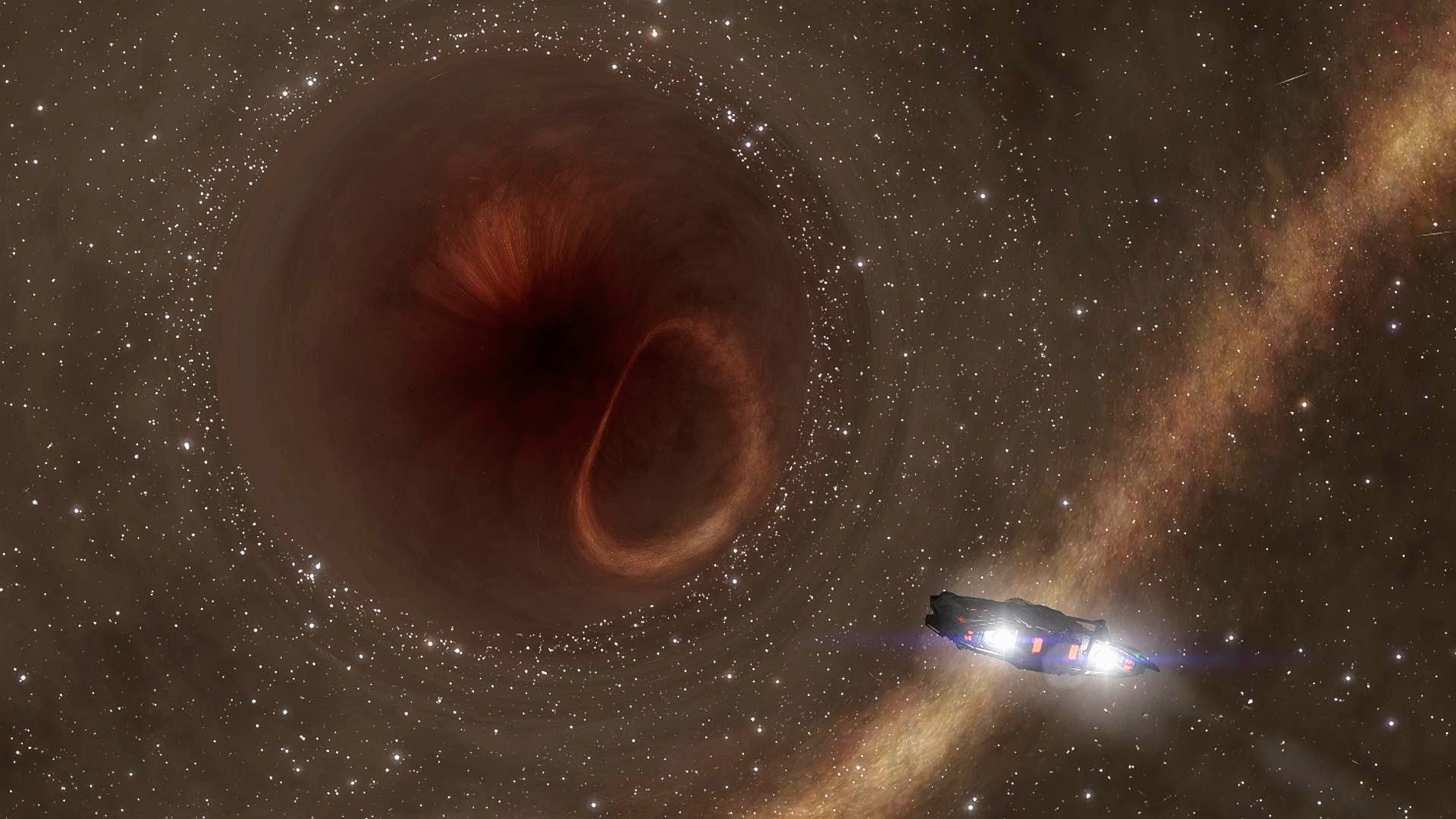
Sagittarius A* does not disappoint! Like many things in Elite Dangerous, a screenshot or even a movie doesn’t do it justice! You have to actually go there! It’s huge. REALLY huge. And it heats your ship up dangerously if you fly too close. I just kept performing flypasts, looking up at its magnificence through the Palomino’s top canopy as it roared past. Utterly, utterly stunning!
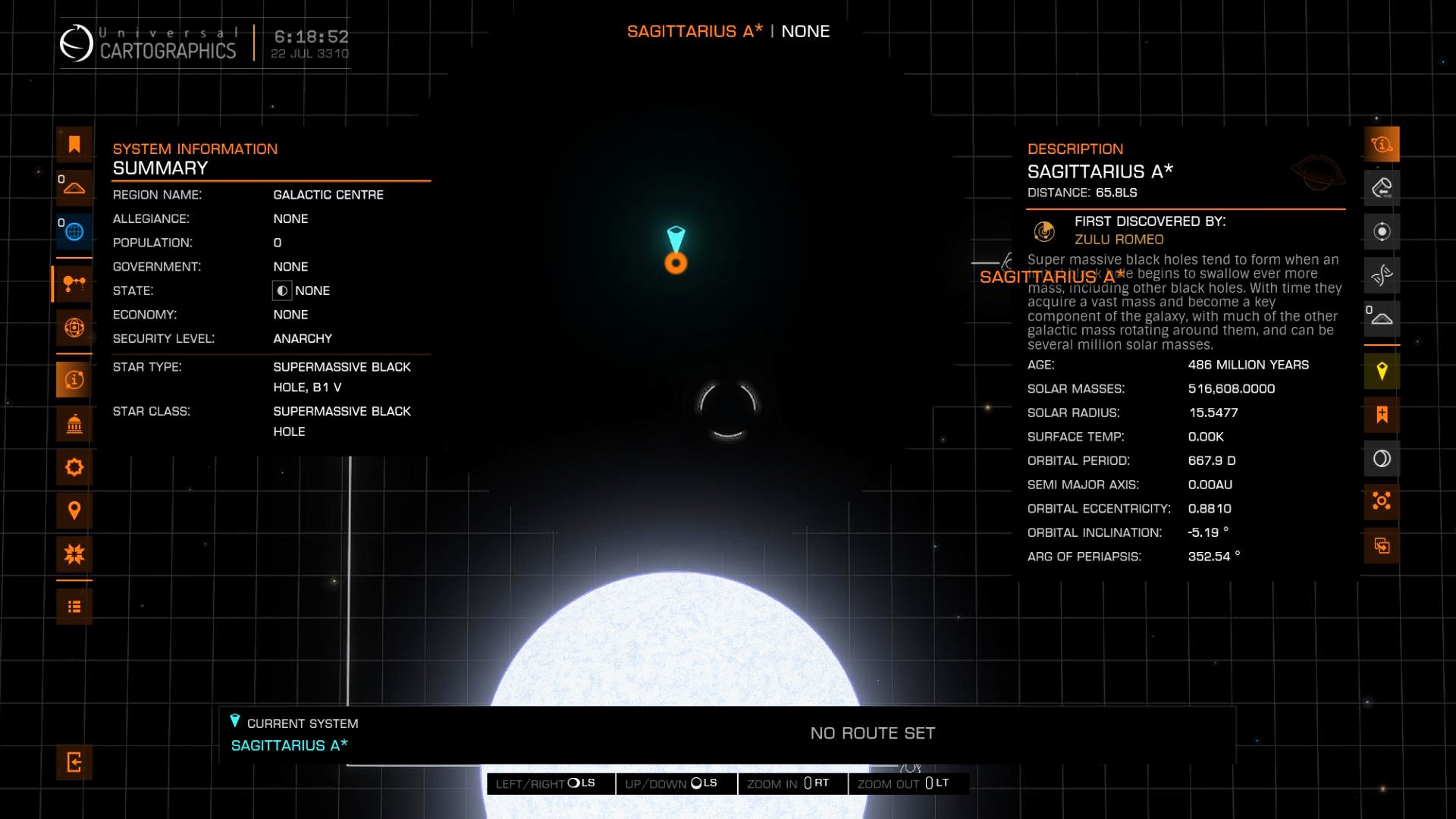
So what next? Well, back to Colonia, of course, to save some of those blueprints and then…back to the Bubble. The Bubble is the easiest place to gather materials which I have almost completely run out of. And I will need to use those mats to engineer my modest fleet with the new SCO drive. Plenty of times on this voyage have I wished for one and could well have done with them on all my ships.
And then…?
I think I hear Beagle Point a-calling to me!

 Elite Dangerous RUSH FLEET