
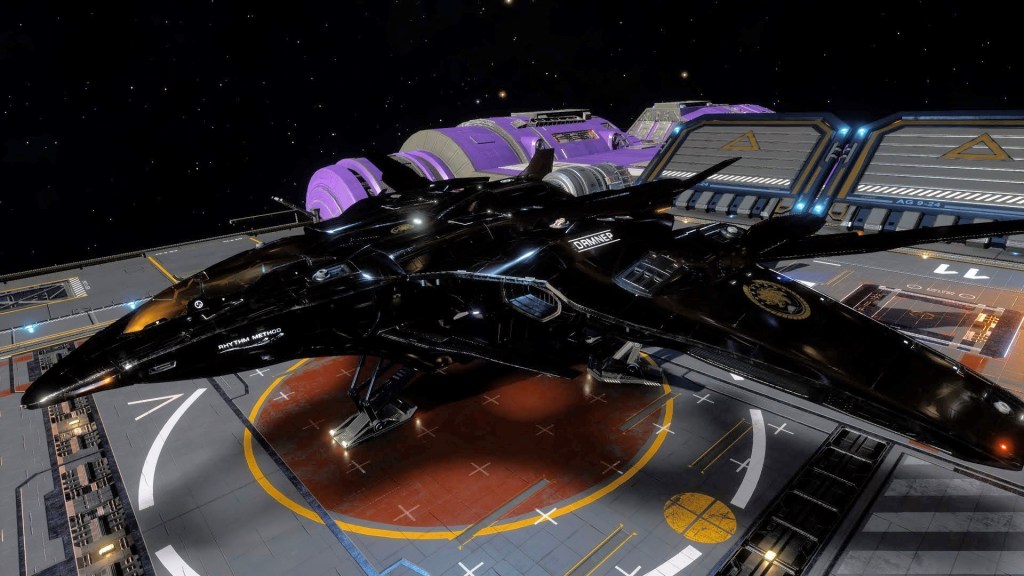
With an unmatched jump range for a medium ship, cool running, superb SCO performance for those distant orbiting secondary systems plus unmatched supercruise agility and a healthy range of slots for everything you might need on a long trip – you might think the RushFleet would welcome another superb explorer candidate with open arms.
But that’s just the thing – yet another explorer. We’re not going to use this beauty for exploring. There’s a single capability she has that gives a clue as to what Cmdr. Geddy is using her exclusively for.
Her incredible supercruise agility.
And if there’s one thing a ship needs in Buckyball Racing, it’s the ability to effortlessly spiral in to orbital platforms or orbital flight and drop out into normal space in front of the station or directly into glide at the last second. No other ship does that anywhere near as well as this one.
This is the RushFleet’s Mandalay.

Her name…is the Rhythm Method.
I mean, almost everyone is using the Mandalay as their main explorer these days. And with good reason. It absolutely excels in every attribute needed for exploring. Indeed, I use one in my main account for exploring. Cmdr. Geddy, however, likes to explore in a plethora of different vessels and has instead engineered the Rhythm Method exclusively for Buckyball Racing. Nothing, I repeat, nothing has the ability to corkscrew into a target at insane supercruise speeds quite like this amazing ship. I won’t include a detailed step-by-step guide to gravity breaking here. For a start it’s impossible to give instructions and even demonstration videos don’t really give you the tools with which to master the manoeuvre. You just have to keep trying it, over, and over and over again. For an idea, though, you may want to check out my post, “Zen and the Art of Gravity Breaking“

In the latest Buckyball Race you can see here I am approaching the surface port Lawhead Reach not with a 0:06 second ETA, as is the safe method, but corkscrewing into the planet at breakneck speed with a constant 0:02 eta. When you get this right, it’s utterly exhilerating!
Get it wrong, you’ll get a “TOO FAST FOR ORBITAL CRUISE” warning and you’ll drop out of orbital flight way too high above the planet’s surface, It’s basically an automatic abandoned run and you’ll have to go back to the start.
This time I’m corkscrewing in to the orbis station of Harrison’s Cradle. It’s orbiting its planet rather close so both the aim and timing has to be precise. Get it wrong and you either get dragged to a crawl by the gravity of the body or you completely overshoot the the “drop out of supercruise” window.

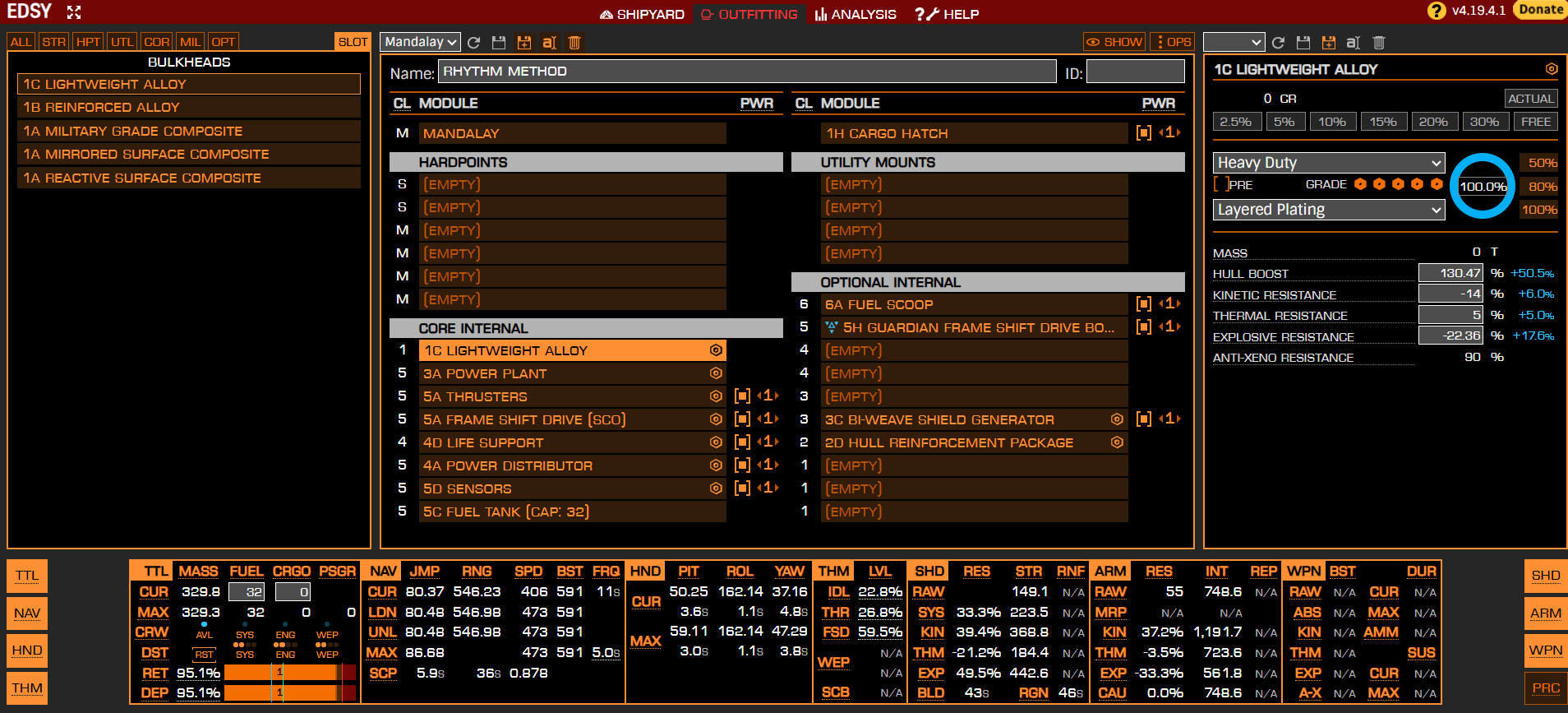
Engineering for Buckyball Racing is similar to exploring. It depends of the race rules, of course, as each race is unique. Fuel scooping may be required, for instance, or extra fuel tanks if refuelling is against the rules. Sometimes a race requires you to travel as far as possible and back with the life support switched off, so a good life support could be essential. Generally, however, everything as lightweight as possible, but with an energy focus on the engines. So the distributor is engine focused, drives are dirty drag. You also want the furthest jump range as some races can last a few hundred light years. I’ve also included a small shield generator for the odd bump or two and also both a full engineered heavy duty lightweight hull and small hull reinforcement for those times when the rules either bans shields or gives a bonus for flying without them.
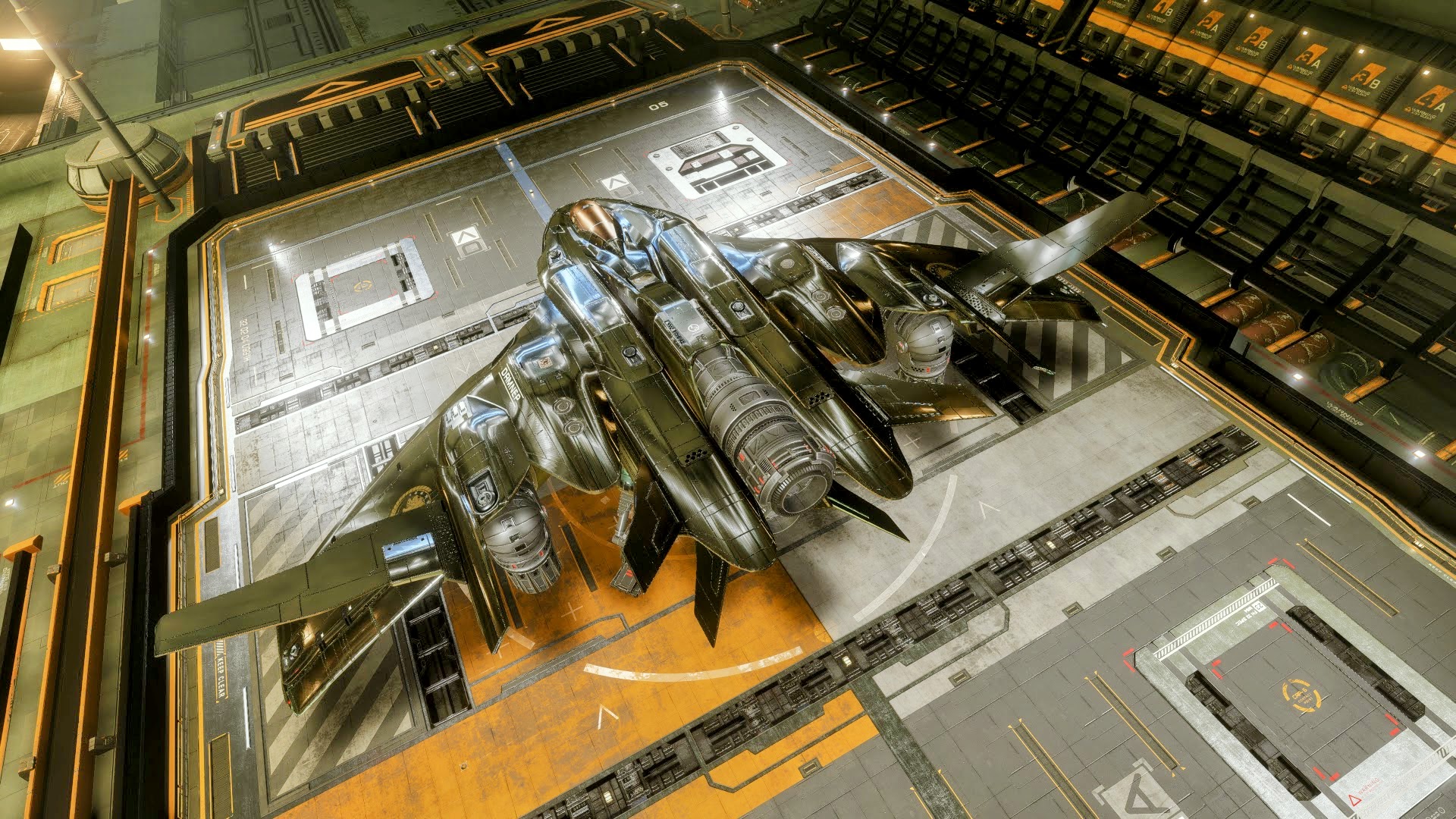
The Rhythm Method
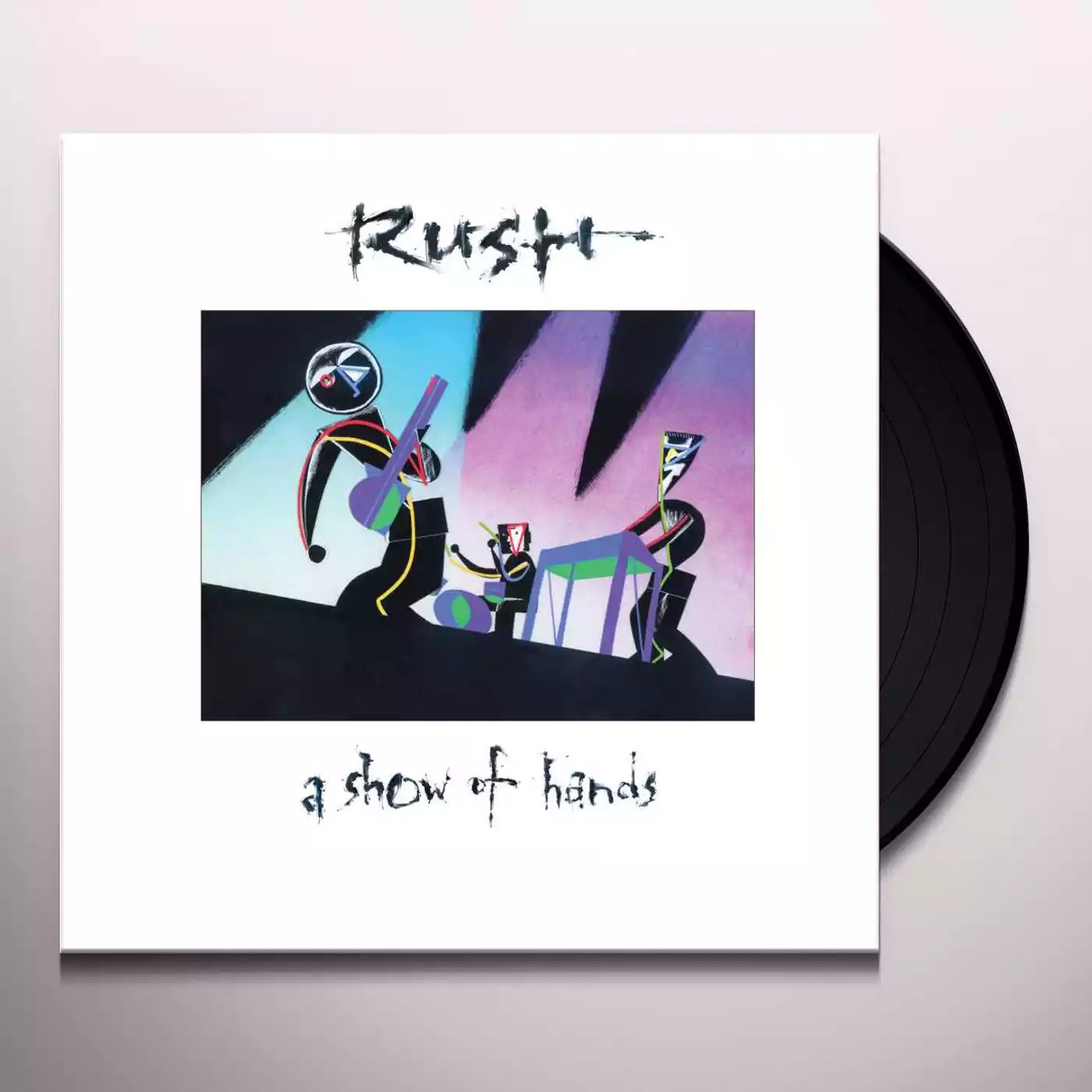
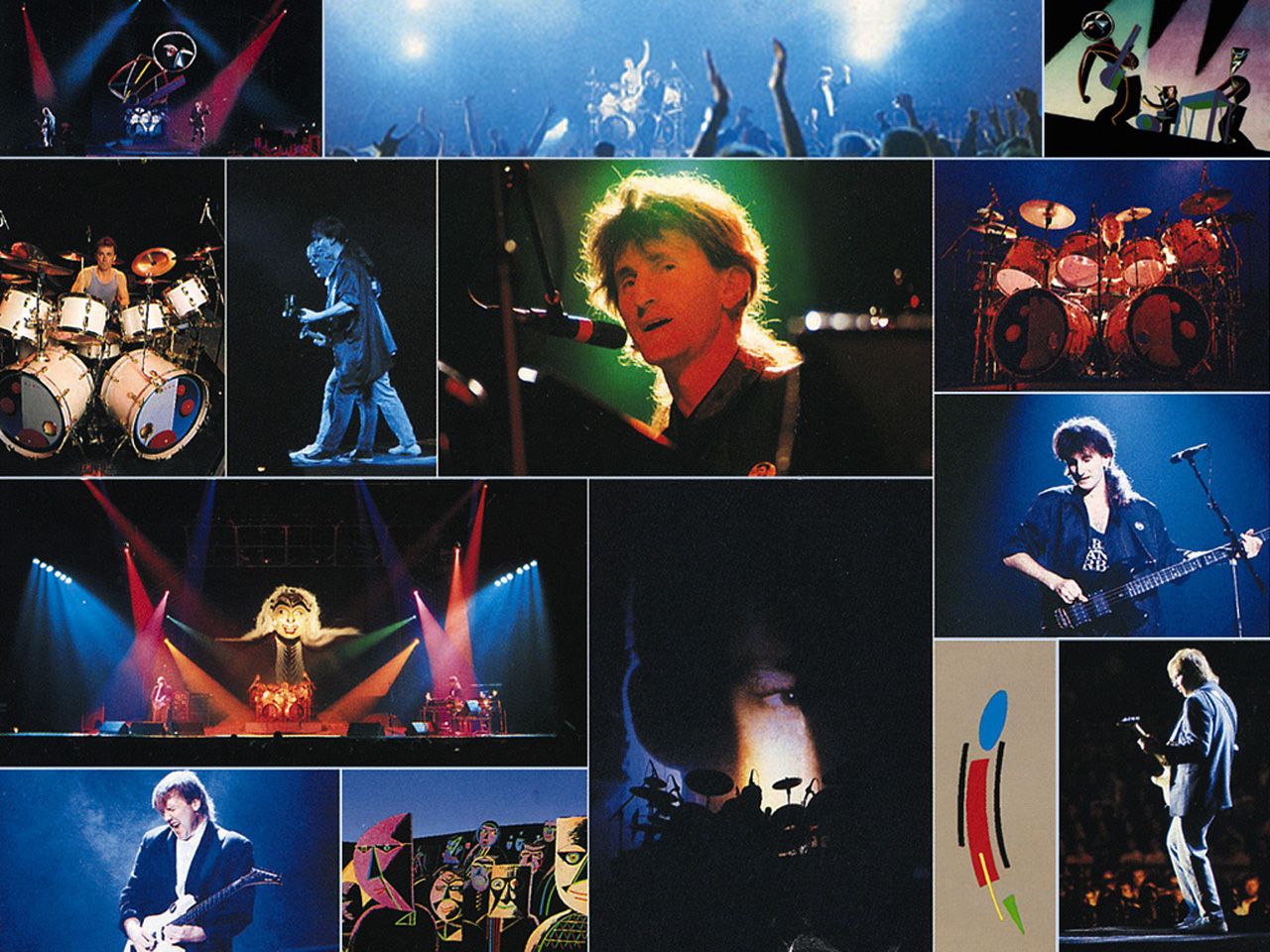
Okay, any Rush fan will know exactly what is meant by The Rhythm Method and it has nothing to do with birth control! It is, of course, the name of a Neil Peart drum solo. When I first started buying Rush albums, the live albums were always a high priority. The solos on the two earliest live albums, “All the World’s A Stage” and “Exit…Stage Left” are contained within a Rush song but the solo on the late 80’s live album “A Show of Hands” had it’s own listing.
The Rhythm Method
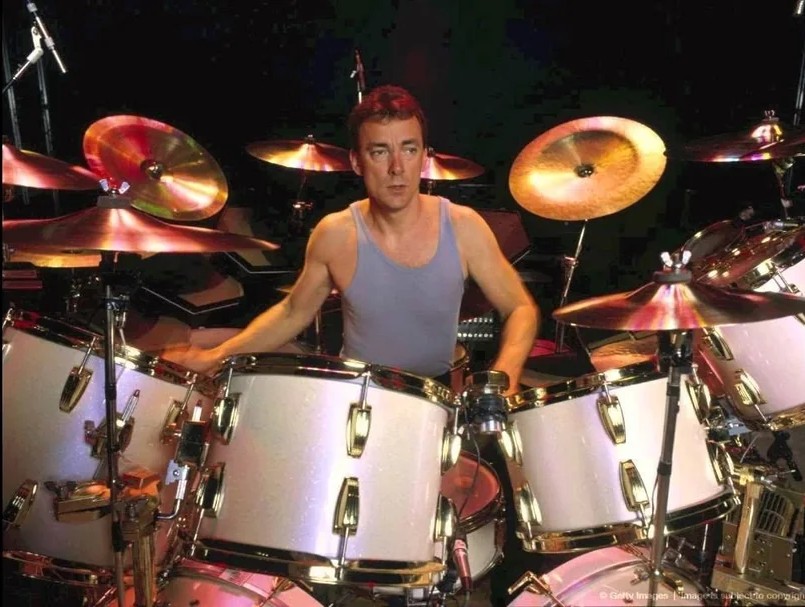
From the start Neil insisted on including a drum solo in every set and it wasn’t very long before it became the highlight of each and every show, Neil’s percussion compositions, for that’s what they really were, are legendary and had gradually evolved with each tour. Bits were constantly being refined and reworked and then more percussive instruments woven in, such as cowbells and glockenspiels, as he added them to his setup. Eventually, electric drums and electronic triggers were included and his solo’s evolved into something more like symphonies.
Neil was constantly looking to improve his drumming. He insisted on making his playing better than it was on the previous album. Always learning, always seeking to improve. Between the fifteenth and sixteenth albums he took lessons from the legendary jazz drumming instructor Freddie Gruber and changed his grip on the sticks in order to achieve full four limb independence on the kit. As a result, the drumming on Test For Echo is some of the most fluid playing he’d ever achieved.

You can see part of The Rhythm Method here. Everything you hear, including the trumpets, is played by Neil.
 Elite Dangerous RUSH FLEET