

It’s Saturday 29th March, 2025. Around a quarter to six in the morning. It’s a wonderful time of day. My favourite time of day. Particularly at this time of year. The light outside seems lazy. Slowly creeping around the countryside, beginning to fill the shadows and oozing into the dark cracks left over from the night before. A thrush is singing at the top of one of the beeches at the foot of the street where I live, and all the other birds are now waking up and starting to add their voices to it’s once solitary aria.
I’m pleasantly surprised because the online app I’m using has given me this particular time to look around outside, and it’s a lot brighter than you would expect, but more about that later.
This is the time when I play Elite Dangerous. Everyone else is in bed. It’s just me and The Black. Low chance of a disturbance, and the first Buckyball Race of 3311 began yesterday at noon.
It’s time to go for my first attempt!

Buckyball is being run a little differently this year. Gone is the strict edict of eight races held every month or so. Various members have elected to run a race and they will run it when they are ready to. There’s no telling, really, just how many races there are going to be this season although it’s unlikely there will be as many as eight. Everyone agreed last year’s schedule was a little hectic so this year the whole affair has a far more chilled ethos.
Time And Motion Study, is the first such race courtesy of this season’s sponsor, the incomparable Alec Turner.
It was a lovely, short race, with only five stops – two surface stations to land on and three orbital stations (including the start/finish). Start at Somerset Station (I Carinae), then Lawhead Reach (Ennead b2), Qureshi Enterprise (Khaka), Harrison’s Cradle (Mikir), Shosuke Horizons (Sesuang a3) and back to Somerset Station. We could visit the checkpoints in any order we wished and they were all within no more than 38.5ly of each other and a nice round route won’t need any more than a jump range of 23ly.
And, of course, there’s a catch.
Before we launched we had to predict a time within which we had to complete the course, entering it into the local chat box just before we start. If we managed to beat or equal that time, then our official race time was the time we had predicted. But if we were slower, then our official time would be our predicted time plus twice the amount of time we missed it by. For example – if I predict a time of 18:00 and I completed it in 17:00 or even 15:00, my official time on the leaderboard would still be 18:0o. But if I finished in 18.30, I will have been slower than my predicted time by 30 seconds and therefore my official time would be 2 x 30 seconds added to my predicted time, making it 19.00.
The more you think about it, the more devious, cruel and ingenious it gets!

I’ve been totally obsessed with Pluto lately. If you want to know what on Earth the dwarf planet Pluto has to do with Buckyball, or even Elite Dangerous then you’ll have to wait until later. As many Elite Dangerous players are obsessed with astronomy like me they will know everything there is to know about that beautiful little ice jewel already but some of you might not. And it’s stuff well worth knowing too!
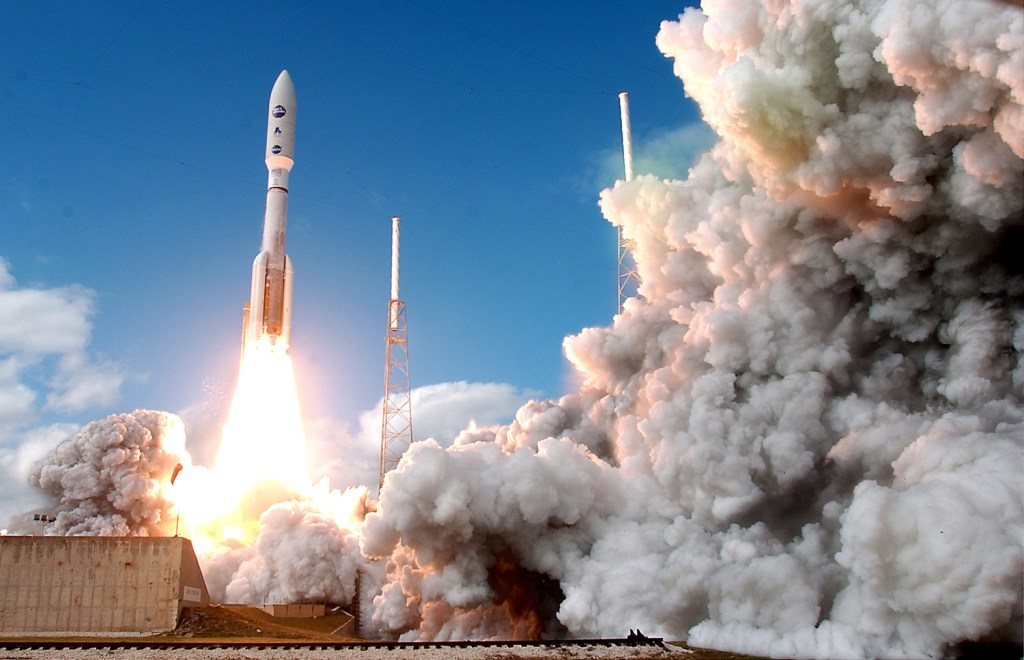
On the 19th January, 2006 an exciting new spacecraft was launched. A probe destined for the farthest reaches of the solar system called New Horizons. It’s main mission was to fly by and investigate Pluto and it’s large (relative to Pluto) moon Charon.
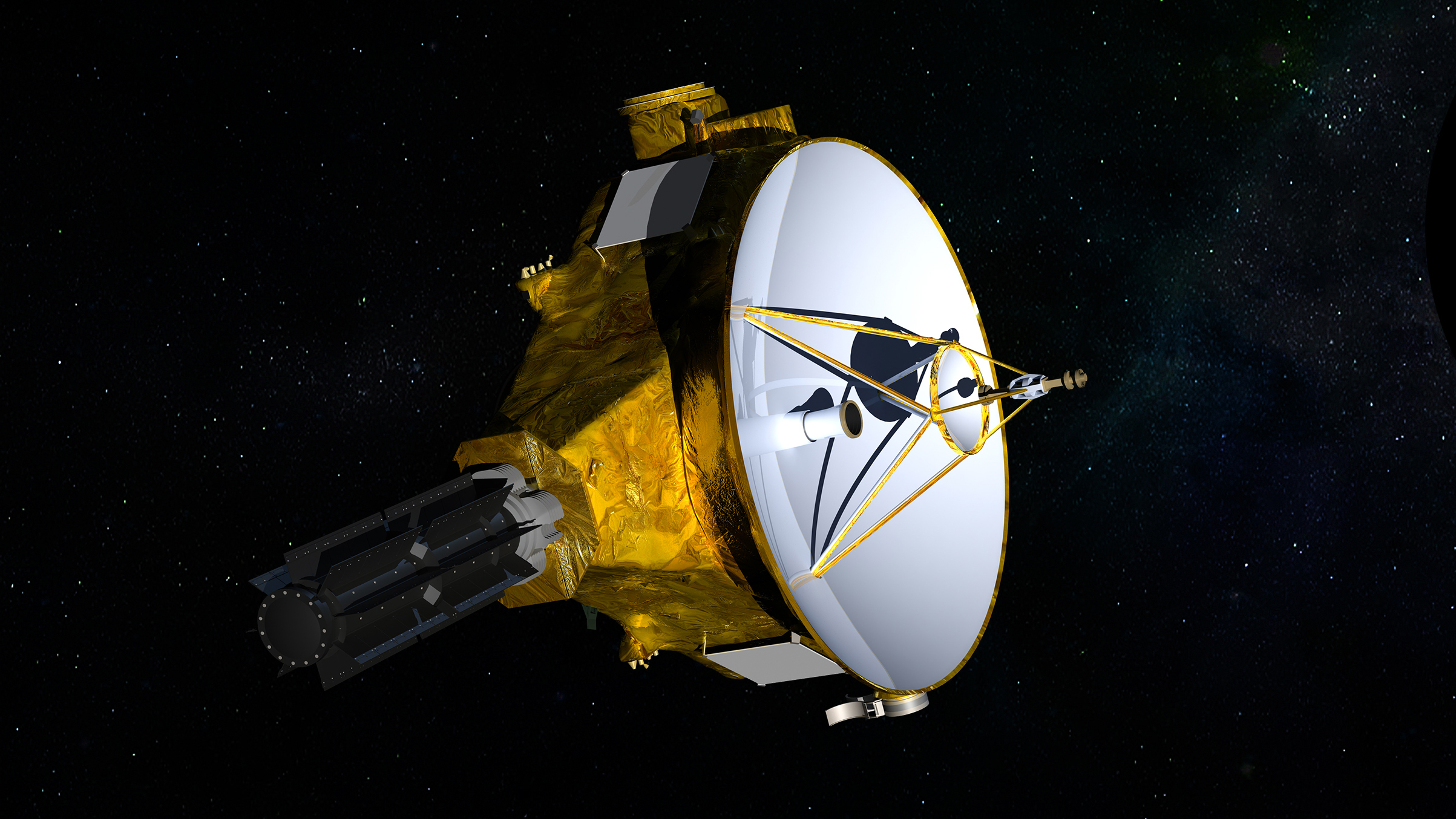
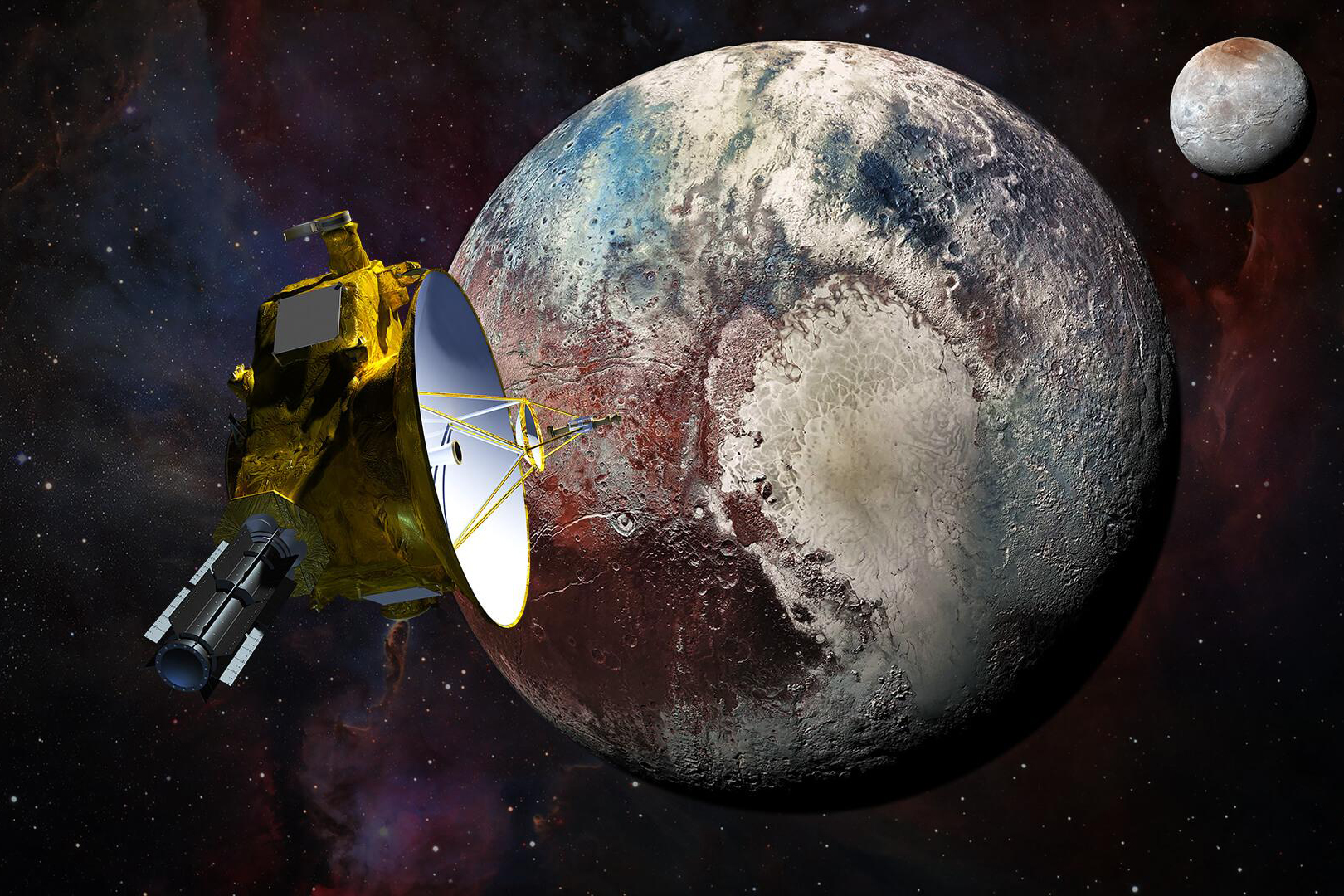
Up until now scientists thought this tiny planet, smaller even than our own moon, was dark, dead and mostly featureless. Maybe there would be nitrogen or methane ice and maybe even glaciers. It took over nine years for the little spacecraft to reach it’s objective, and when the data began to flow back, it blew the astronomers’ minds!

Pluto, named after the Roman god of the underworld, is a dynamic world featuring not only active nitrogen ice glaciers but an intermittent tenuous atmosphere. They found that when Pluto’s orbit moves closer toward the sun its ices sublimate to form a much larger tenuous atmosphere. Then as it slowly moves away those gases gradually refreeze, falling to the surface as snow.
And that wasn’t all. The pictures that were being sent back from New Horizons were giving us even more incredible insights into this remote, frozen, fascinating world.

It was time for an initial attempt. I wasn’t sure how much gaming time I’d have for runs this race. I was trying to get one of my other accounts, Freya, out to Shackleton’s Star (the most southerly reachable point of the galaxy without FSD injection) and back home again in time for her to purchase the new Imperial Corsair and using it go about terrorising all the commanders currently trying to build their new stations, stealing their goods without actually destroying them, and then delivering said goods to the relevant colonisation ship to reap the profits for herself. But that’s for another post…
Alec declared that for the first time in BRC history the Mandalay would be permitted in this race but the RushFleet’s Mandalay hadn’t even been outfitted, let alone engineered, and I really wanted to get out onto the course. The Passage To Bangkok, the fleet’s dolphin was still left ready from the last race of the previous season and she had served me perfectly well in that.
Seemed a no-brainer to me!

I flew out on an experimental run, working out what would be the optimal order (which didn’t matter too much as the stops are all pretty close) and it looked like I’d be able to do a run in around twenty minutes. Back at the start I set the camera rolling, plotted to the first waypoint, raised the platform out of the dock, ran through all my modules to show the camera there were no illegal flight assists, entered my predicted time into the local chat (20:00), waited for the clock to reach the end of the current minute….
and launched.
It was an ok run, great, in fact, for me. For an initial submission, anyway. I arrived back rather faster than I had predicted although, I quite correctly determined, it would probably be placed at the lower end of the leaderboard.
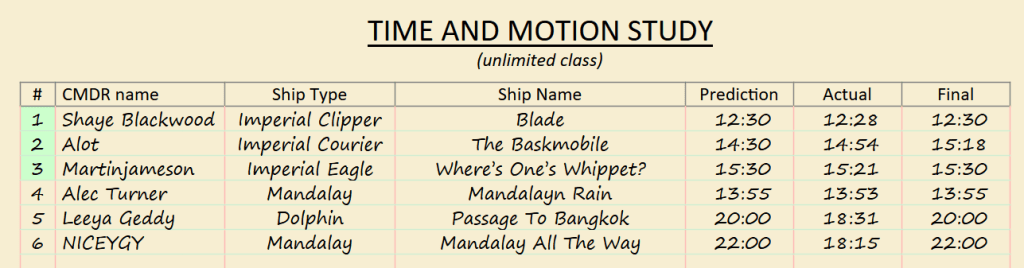
Again, note first place. Shaye Blackwood. In a Clipper!
It was pointed out, in case I had missed it, Alec had expressly stated the Mandalay should be allowed, and he seemed to be actively encouraging us to use it. There was nothing else for it! I have a fleet carrier full of almost every ship in the game! I could cannibalise everything I needed to outfit that bloody Mandalay. So that’s exactly what I did!
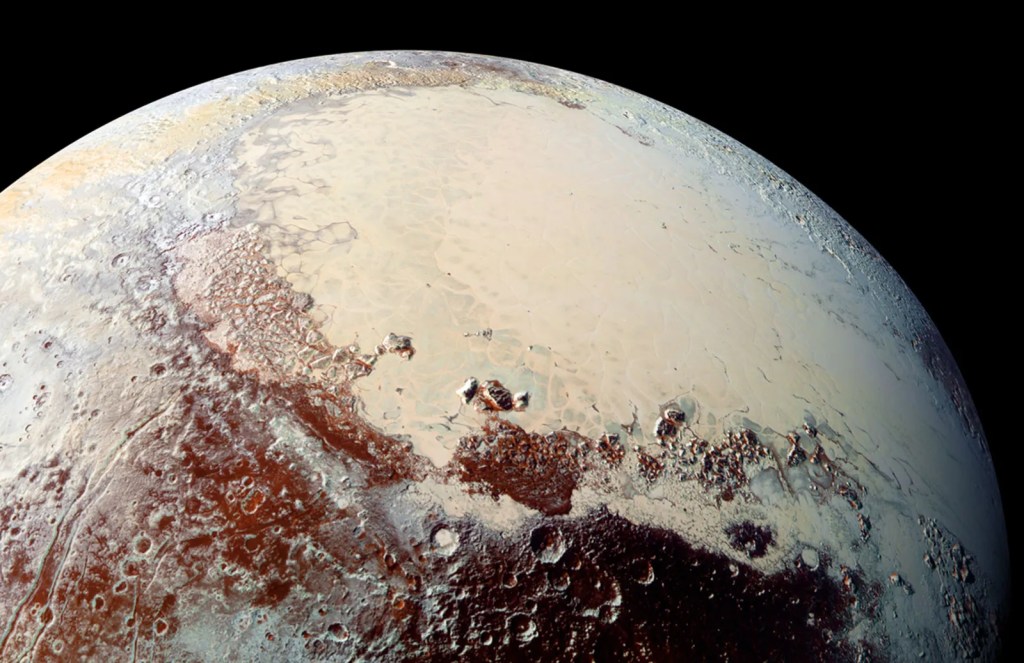
One of the main features of Pluto’s surface is the almost heart shaped plane of Tombaugh Regio, the left half of which is a massive ice lake called Sputnik Planitia (seen above). As you can see whereas most of Pluto is covered in craters Sputnik Planitia is completely clean, meaning the surface there is very young, and likely is constantly being renewed. The lake is lower than the rest of the surface of the dwarf planet and is thought to have been created by a massive impact and is full of nitrogen ice. A cycle of sub-surface sublimation and freezing creates an ongoing convection that keeps the surface of Sputnik Planitia active.
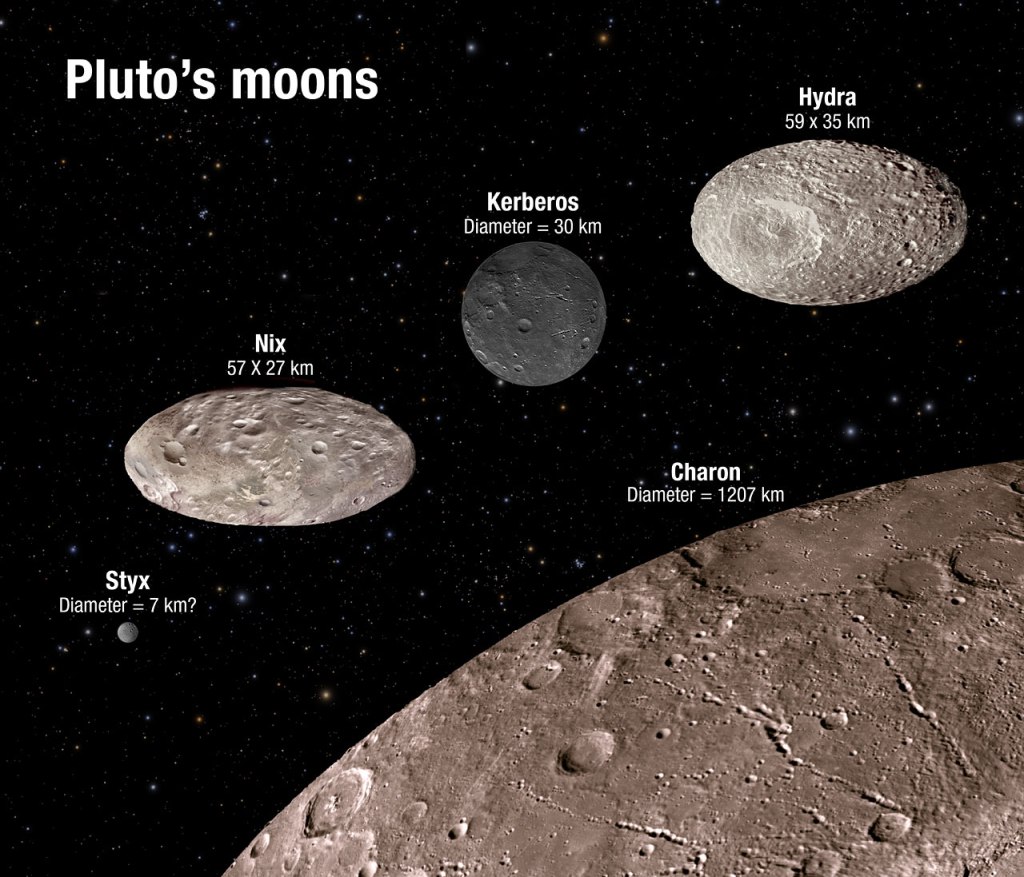
Pluto also has five moons – Charon (the ferryman of souls), Kerberos (aka Cerberus, the three headed dog who guards the underworld’s entrance), Hydra (the seven headed snake who also guards the entrance), Nix (Nyx, the goddess of darkness and night, mother of Charon) and Styx (one of the rivers of the underworld).
Sometimes considered a “double dwarf” system Pluto and Charon share a centre of gravity which lies just outside the body of Pluto and are tidally locked, orbiting each other every 6.3873 days. A bit like an olympic hammer thrower spinning around before they throw the hammer, except the ball at the end of the chain would be the size of a beach ball and the chain itself around forty eight feet long.

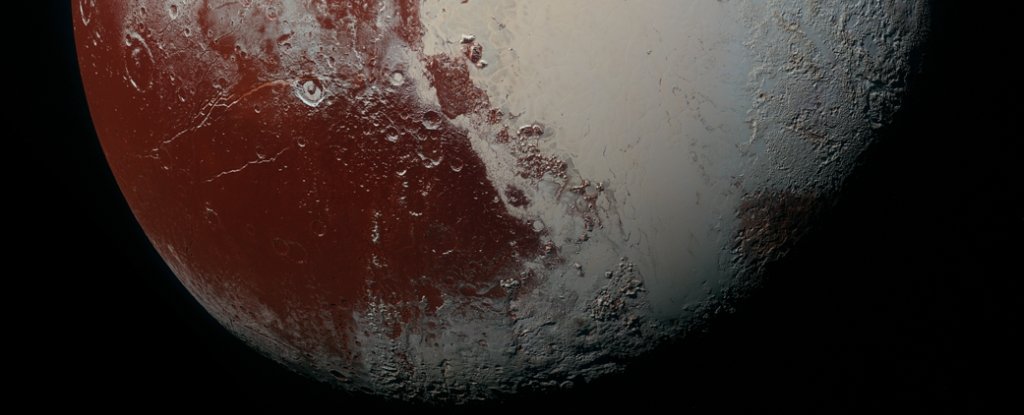
Being a fan of H.P. Lovecraft’s stories I was delighted to learn that the large brown coloured plane that lies adjacent to Sputnik Planitia used to be called “Cthulhu Macula” or “Cthulhu Regio” but the name that has since been settled on for that area is now just “Belto Regio” It is an area covered with craters, mountains of water ice, and cryovolcanism. The colour, I was fascinated to discover, is a result of “tholins” mixed up in the cryomagma covering the surface. These tholins are complex organic compounds formed when ultra violet and cosmic rays from the sun irradiate microscopic carbon structures in tandem with water or nitrogen. This brown organic slurry, as the astronomers describe it, erupts regularly from the large cryovolcanoes and sometimes the eruptions are violent enough for the substance to be ejected from the planet completely. Some of this material ends up on Charon and astronomers concur that might well be the powdery looking red patch on its northern polar region.
Pluto, far from being the dead rock I thought it was, is a world of marvels. But there is one other fact about this little gem of a world that really made me connect with it’s wonder.
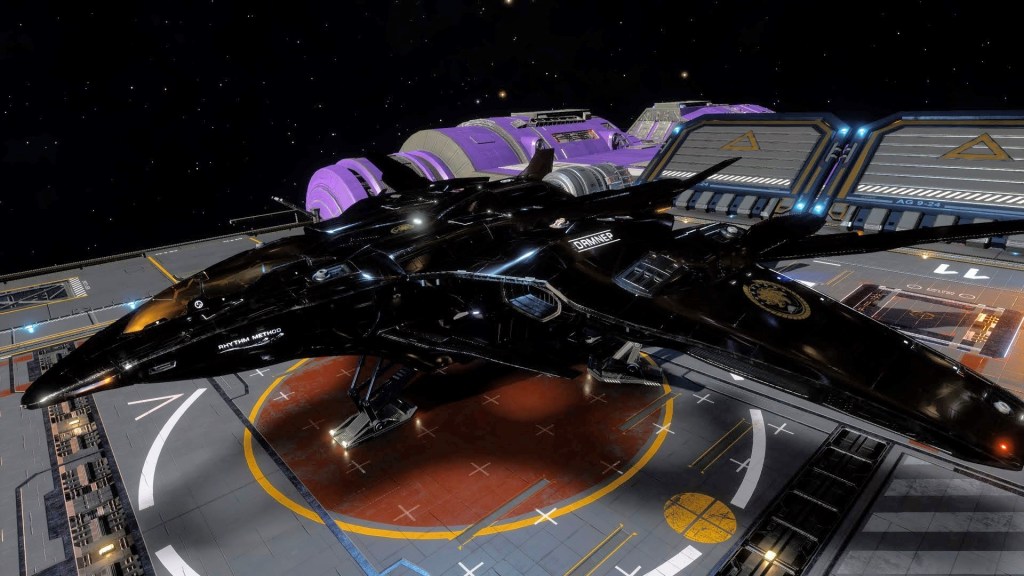
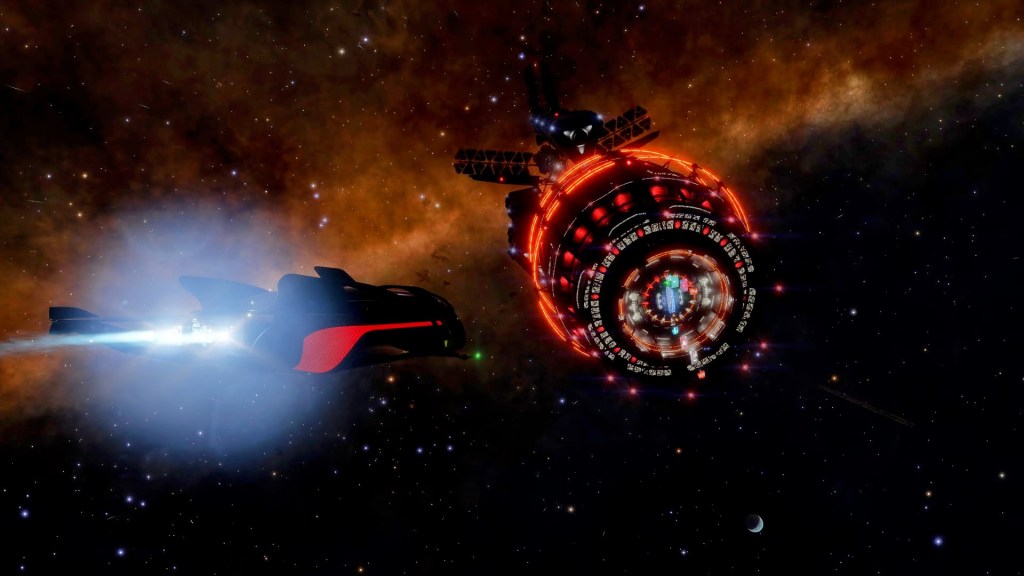
Introducing the RushFleet’s Mandalay the Rhythm Method!
Now we’re talking! It quickly became apparent that using a Mandalay for Buckyball is like having stabilisers for gravity breaking. I could now be far more aggressive in the way I approached bodies. The difference is incredible!
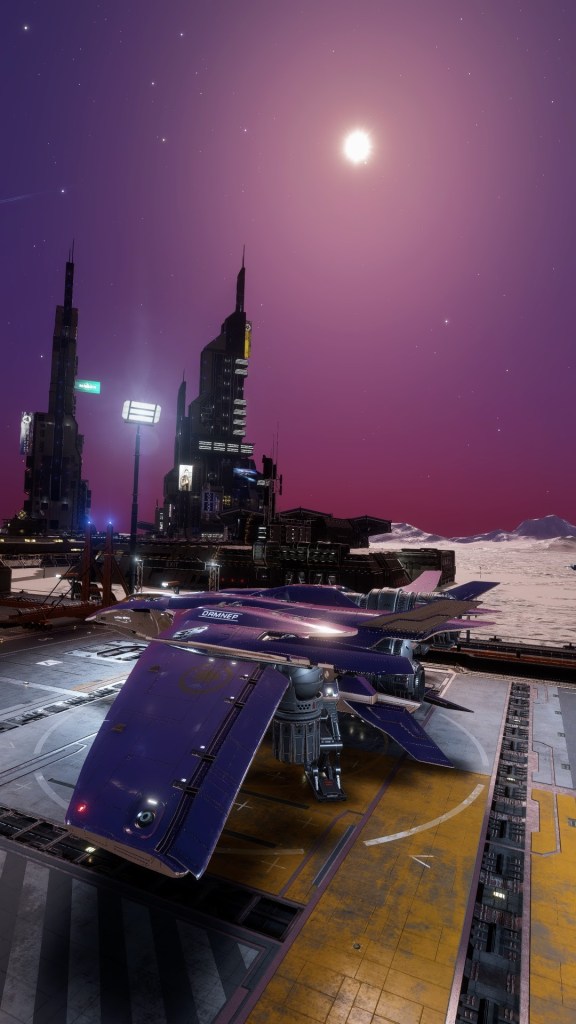
And I now saw the ingenuity of Alec’s course. Two planetary surface approaches and three orbital bodies (including the finish station). It might seem obvious but having far fewer opportunities to mess up an approach actually helped me to figure out how to do this stuff. I mean, I wasn’t hitting the orbital flight that accurately and there was still an uncomfortably long wait until glide engaged but it was now far, far shorter for me than before. And my angle of descent towards the target was more favourable far more often too. It became a complete thrill! Hurtling toward the body in supercruise and then finally figuring out where I was in relation to the target as it moved out of sight.
More often than not I was getting it right.
For my second submission attempt I decided to go for 17:00 – a full three minutes quicker than my first prediction and a full minute and a half quicker than my actual time. It was a pretty good run, and again I wished my ambition had been greater.
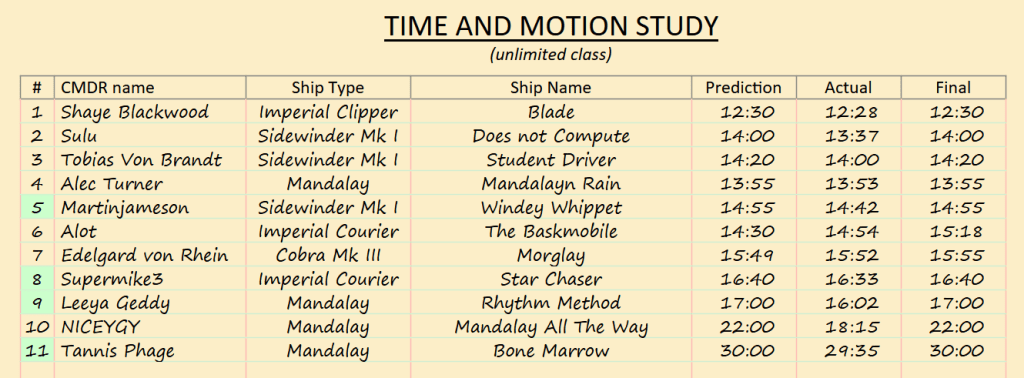
As you can see I finished almost a full minute quicker!
I was definitely getting better at this.
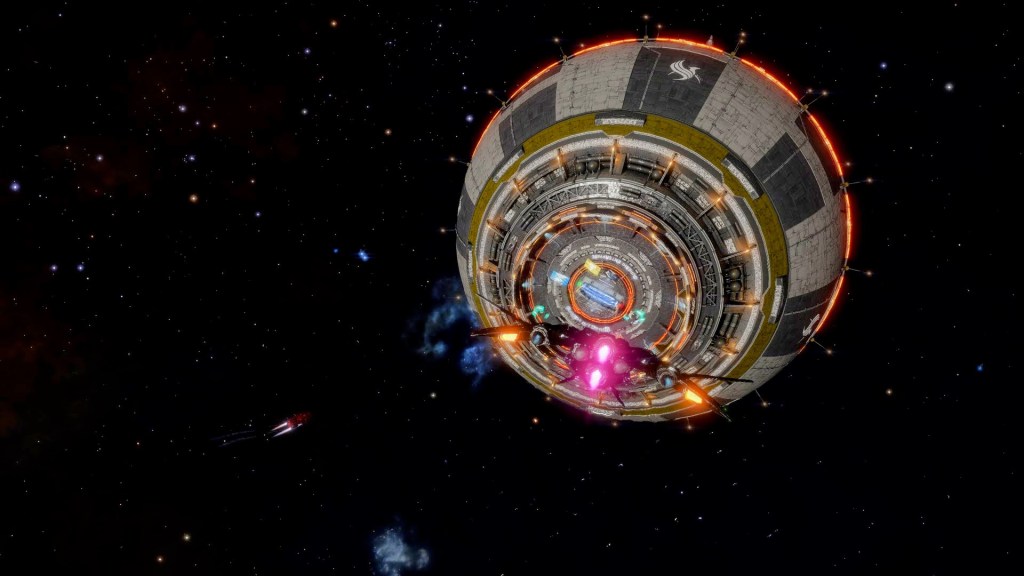
A couple of days later I made a third attempt at a submission. I swallowed my caution and entered 15:45 into local chat. Would I really be able to beat sixteen minutes?
It was a bumpy run. Overshot one of the stations, had a much longer approach to Shoshuke Horizons than I was happy with and I completely forgot to lower the landing gear at Lawhead Reach, leading to an agonising wait for them to deploy as I hovered over the platform. But, even with all that…
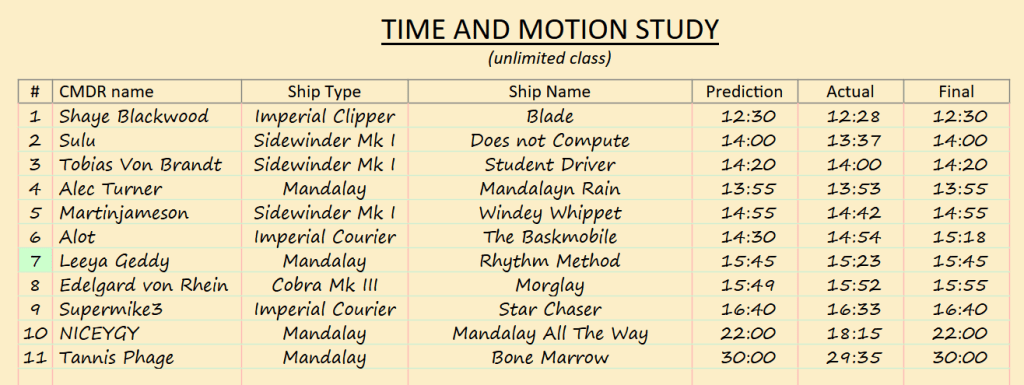
Beat my predicted time by twenty two seconds! I was exhilarated! And not only that but I was well inside the top ten! Yet to be sure to stay there I needed to break fifteen minutes. I could do it, I was sure, but would I be able to do it by the time the race ended?

Astronomers thought Pluto, being so far from the sun, would be very dimly lit.
It has a slightly eccentric and inclined orbit (in fact, since it’s discovery in 1930 it has yet to complete a full orbit of the sun). At it’s furthest it is 4.6 billion miles from the Sun but at it closest it comes to 2.8 billion miles – within Neptune’s orbit.
New Horizons, although the pictures it took had long exposures. took very brightly lit shots of Pluto’s surface. A lot more light was able to reach Pluto than astronomers first thought.
I discovered there is an application on NASA’s website that gives you a time of day, on Earth, depending on where you are, where, on a clear day, the light levels are the same as high noon on the equator of Pluto. On Friday evening the 28th March I entered my position into the application and was told the next time the light where I was would be just as it is on Pluto would be just before sunrise at 5,45am the following morning.
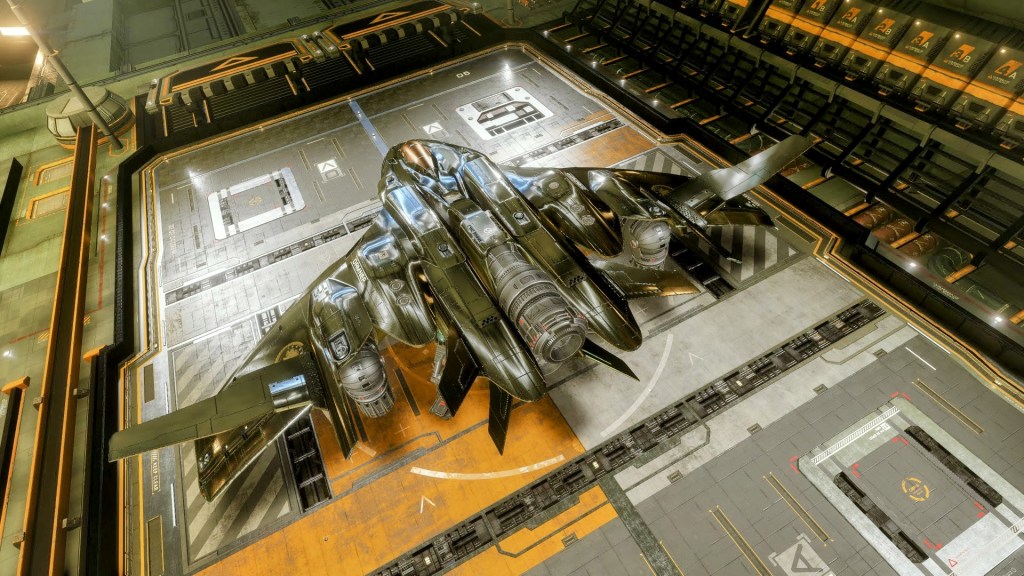
There were only two mornings left. The previous Saturday I had made a right mess of my attempts and gave up. Sunday I felt a lot better. I made four attempts. I came really, really close.
But still no cigar.
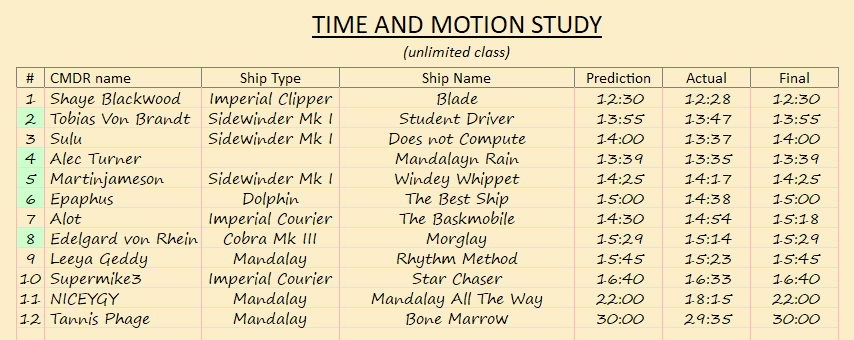
The penultimate leaderboard showed me dropping to ninth position. I badly needed to break that fifteen minute barrier!
Yet try as I might, the following Monday morning I fared no better. Well, I’m a little harsh on myself here, I was frequently hitting around the 15:10-15-25 area so, if I had been a little more conservative and put in, say 15:15 instead of being so bloody minded about 14:58 or something I may have been able to make a final submission. I needed to fly just that little bit differently in order to make that breakthrough and it was becoming plain I wasn’t going to do anything in that vein that morning.
There is no need to be all that disappointed, however. I’m happy with my final time of 15:45 although really, my actual time was 15:23. And this race, with that cruel, cruel caveat of having to use your predicted time and punishing you for missing it….well, if it wasn’t for that, I would have given up at 17:00!
And so unto the final leaderboard, how did everyone else do?
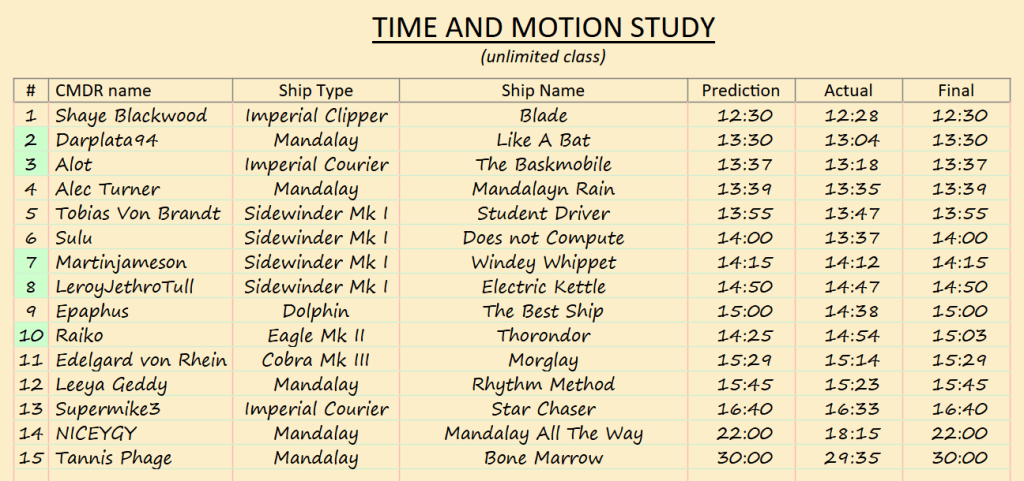
Sigh! Twelfth! I might be getting better, but so is everybody else. How terribly inconsiderate of them.
Massive thanks, of course, goes to Alec Turner. What a clever concept. Although, it has been done before, it was a great way to push us to keep trying and attempting runs a lot more than we normally would have done. He has run such a marvellous race, too with constant leaderboard updates and excellent commentary throughout. And a huge congratulations to the winners! It looks like I’m going to have to practice my approaches even more thoroughly if I want to ever finish in the top ten!
The next race is…well, could be any time. Make sure to keep checking the Discord and join us! It doesn’t matter how good you think you aren’t, you will be welcome and, more importantly, you will have a lot of fun, and make a lot of friends!
Until next time, Buckyball fans!
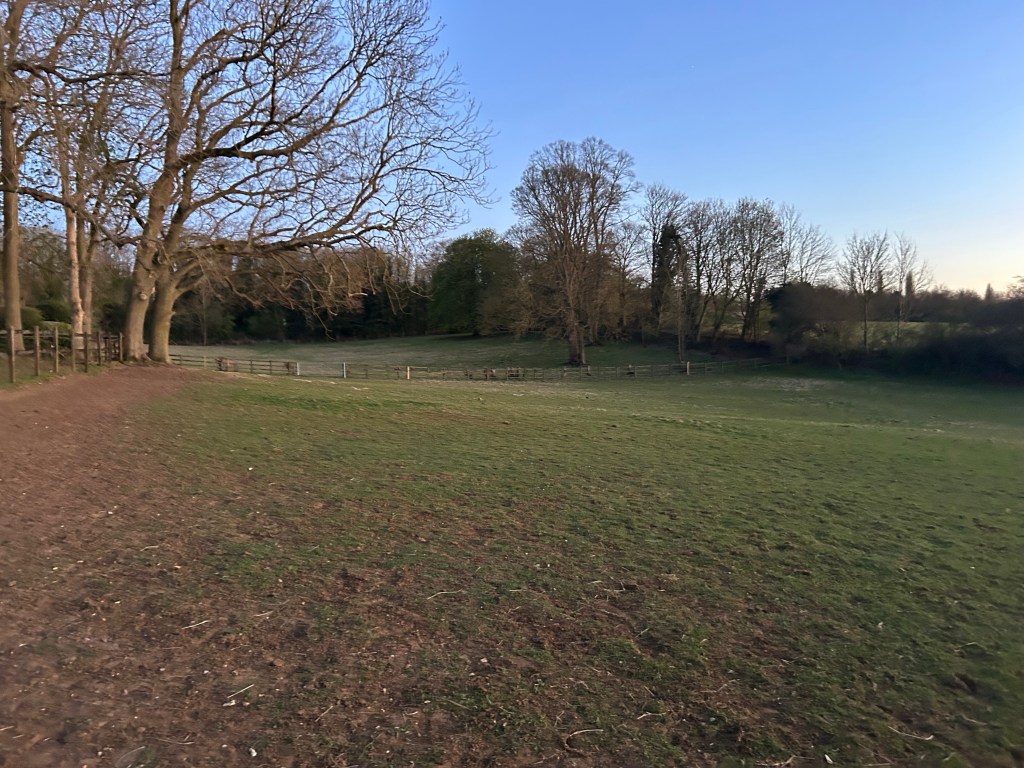
It is late Monday evening on the 7th of April. Approaching 8.00pm. I’m taking my golden retriever for a walk as I usually do at around this time every evening after British Summer Time begins. The sun is about to disappear below the horizon.
It is nearly that time.
I decide to cross the road bridge and we head the short way up the hill to the fields where my horse is stabled. It’s not far and we’re at the gate with five minutes to spare. I open the gate and walk into the sprawling fields and wait the few extra minutes for the appointed time.
Exactly 8.09pm.
The thrush is singing in earnest. A blackbird mourns the passing of the day. Soft, curious neighs sound behind us from the stables as we venture further into the green. The appointed time arrives. I take some pictures, and marvel at the light. The shadows under the trees are growing, the light is seeping out from amongst the hedges and coppices of the paddocks.
This is my quiet time, my gentle, peaceful stroll time, my drink the beauty of the primroses, anemones and bluebells of the woods time, and in the morning, when the light is once more just so, it will be my gaming time, my exploration of the galaxy time, my hauling goods time, my powerplay time, my Buckyball time…
 Elite Dangerous RUSH FLEET
Bravo homborger! Glad to see you enjoyed the Mandalay
Great post as always 🙂
LikeLiked by 1 person
Thanks Niceygy! 🥰
LikeLike