

I must admit, I finished Geddy Lee’s biography with a tinge of disappointment. Not because I hadn’t enjoyed reading it of course but because, here and there, Geddy hints at large parts of his writing that he was persuaded to leave out. That his editor didn’t think we’d be interested in. That, somehow, his memoirs would have seemed far too bulky had it all been left in. Yet I fail to see how this could be. My Effin Life is the most thoroughly engrossling autobiography I have yet devoured. Geddy’s writing is vivid, compassionate, funny (often hilarous), tragic, horriffic, insightful and poignantly philosophical. He writes about the wave of his life as if we are surfing it right with him and, if I’m being brutally honest, I could have done with an awful lot more of it.
Firstly, we are given a fascinating insight into his young life as the son of immigrant Jewish holocaust survivors, trying to come to terms with the juxtaposition of his Jewishness and growing up amongst gentiles in fifties and sixties Toronto. We see how having to face the, often brutal, reality of predjudice from his peers begin to mold the Geddy Lee we adore today. We see how his desperation to escape the rigidity of his upbringing especially during the loss of his father drove him into becoming the fastidiously dedicated musician who has so enlightened our lives these past decades. By the end of chapter two, he is on the brink of joining (in my very humble opinion) the greatest rock band of all time and we are desperately eager to hear it.
There is, however, a piece of the puzzle that is Geddy Lee which is fundamental to our understanding of him. A whole chapter of the book is dedicated to describing, in shocking detail, the experiences of his parents, mainly his mother, during the Holocaust of the second word war. There is no holding back with the horriffic narrative as Geddy relates to us the terror his elders were subjected to during those times.


It is very difficult to read, and must have been even more difficult to research and write. As I came to the end I could’t stop shaking, and tears began to flow – so powerful and bleak is his observation. Yet the chapter contains healing as well as torture, and though the journey on which we are taken is overwhelmingly terrible, we are left with a stong sense of relief.
We then realise how lucky we are that Geddy exists at all. The story of the romance that existed between these two brutally oppressed teenagers both of whom regularly cheat death, surrounded by and are the recipients of unspeakable cruelty, become separated and yet still find each other soon after their liberation by the allies is staggering.

It’s more or less all Rush from then on. Although Geddy does address personal issues that deal with the conflict that being in a successful rock band and trying to raise a family inevitably brings. We learn of the difficulties original drummer John Rutsey appeared to have with playing in a full time band, especially one where his bassist and guitarist wanted to go musically in a different direction to him. We feel like a fly on the wall when Neil turns up to that, now legendary audition. We learn of all the drug taking the trio indulged in that, once they realised it was becoming detrimental to their music, they had no problem giving up. Like most groups, Rush spent the bulk of their early touring lives supporting more established acts like Kiss, Aerosmith and Hawkwind and we find out which bands were helpful and which were most definately not! We learn that Geddy can really bear a grudge! We see how being away from their families for such long periods can affect a touring musician in bizarre ways. We see how their approach to writing music changes and matures from album to album. We learm how fame affects Geddy and see how he has to change his way of life to deal with such invasiveness.

We are taken right through all the stages of Rush’s career, up to 2112, to Moving Pictures, to Hold Your Fire to Test For Echo. We gain more insight into their break with Terry Brown and their relationsips with subsequent producers. Mishaps, when recording, mishaps during touring and almost losing whole recordings before mixing.
Alex silently feeling less important as he sees Geddy’s obsession with keyboards seduce him into gradually marginalizing the guitar. Neil becoming more and more alarmed by the attention of his adoring fans and withdrawing from meeting with them completely to save his sanity (we hear this, of course, in the lyrics to Limelight) and we also learn of Geddy’s adoration of Neil’s writing and in particular his drumming.

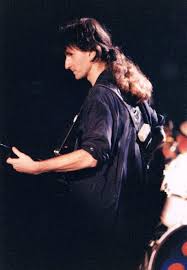
Geddy doesn’t just concentrate on the band either. We get a lot of candid confessions on how he had been neglecting his relationship to his wife and how they were becoming alienated from each other due to their busy independent careers. Unlike most high profile marriages though, they get through it all with patience, therapy and hard work and are still very much in love to this day. We hear about all sorts of things, but the light that shines brightest through it all is just how dedicated a writer and performer of music Geddy Lee really is, and how incredibly close he is to his bandmates. We knew what a tight knit band they always were, but exactly how tight I had never fully realised. Rush endured and thrived where other bands, whilst being great songwriters and performers, couldn’t last more than a few years as the same lineup. It seems vicious tantrums, childish outbursts and arguments over royalties were never on the itinerary for Rush.
I’ve always thought that Alex Lifeson is the most underrated guitarist in the world, and was very heartened to hear Geddy echo this statement. I love the way Geddy describes Alex’s genius, how he so spontaniously creates and writes music. We cannot ignore Alex’s utterly chaotic sense of humour and mischief, sometimes getting the other two into all sorts of trouble. The more you read, the more you realise that not only do the three compliment each other perfectly in skill and viruosity, but also in personality and temperament. You would be very hard pressed to think of another band as talented, close, and successful as Rush.

It all comes crashing to a halt, of course, when the tradgedy of Neil losing his daughter in a freak car accident and then his wife to cancer eleven months later hits the band. Geddy lets us realise how badly this affected he and Alex. How they worried about their dear friend as he nurtured his “little baby soul” by spending endless months travelling solo on his bike across North America. We get to learn how throwing himself into the solo project that would spawn the marvellous “My Favorite Headache” helped him cope during the time Neil was stuggling with losing his whole family. This then gives us a unique insight into how difficult it was for the band to write, record and then tour the album Vapor Trails when Neil eventually felt he could return to being a professional musician once more.

The seemingly heady and blissfull days of the final two albums then drive the book towards its conclusion. Geddy treats the time encompassing the Snakes and Arrows and Clockwork Angels periods as some of the happiest times he’s ever had as a musician. So much so that we can hardly blame him when he resents how happy Neil is when their final tour finishes on August 1st 2015.
Geddy comes to terms with it, of course, but the tone as we witness him slowly realising that this is most likely the end is painful to read.

The final pages are hard to get through. Seeing Geddy hear of the news of Neil’s illness while he is walking in England’s Lake District, and then reading about how they spend their last months with him, all the while keeping the illness a secret from everyone was very moving. And then when Neil finally passed, the funeral, the drinks they had to remember him by, its as if Geddy’s grief wells up out of the page and smothers you so completely it’s impossible not to let the tears flow.
It’s plain that Geddy misses his friend desperately. A bassist and his drummer need to share a special, close relationship on stage and Rush were one of the few bands where it was shared offstage too. Geddy and Alex are still hurting, as we all are as dedicated Rush fans to some degree, not only because of the death of Neil but also because of the death of Rush. Yet Geddy still finds hope and solace at the end and, despite the tragedy, the book finishes on an uplifting note.
I get the sense from this book that I need to “let Rush go”, so to speak. It was a fantastic time while they were performing, full of the very best rock music you will ever hear. We are all exceedingly privileged to have lived during this time and, as a dedicated fan, I am proud to have been a tiny part of their story as it raced along. But there will never be any more Rush. Geddy and Alex may well write and perform together with other musicians, but both acknowledge that it will never be Rush. It’s almost as if I have been set free from the burden of yearning for them to reform and start performing once more. And this is a tremendously reassuring understanding.
Yet this is not the end for Geddy. He may not say it directly (lots of “maybe'” and “if the time is right”) but I get the idea he is itching to get writing and recording with other musicians and I’m pretty sure he would love to play new material live again. I really wouldn’t be surprised to see at least one more album followed by a modest tour, or a handful of charity concerts maybe. And when he does, it’s a safe bet Alex will be involved too.
Neither is is the end for us fans. Their music will always be there. My boys both love them as do the children of many other Rush fans. And so a new generation will keep the Spirit of Rush alive for decades to come. There are also a host of bands making and recording music that are heavily influenced by Rush and, soon, I will hope to list some of my favourites on this site so keep an eye out for this – I am only just discovering them myself! And they’re not just tribute bands, but bands who have taken what Rush did and run with it, adding their own flavours along the way.
LIke I said at the beginning, I enjoyed this book tremendously, but I can’t help wonder about all the stuff Geddy was told to leave out, or cut shorter. I’m all for being succinct (and am regularly wanting in this regard with my own writing) but I could easily read a whole other book of stuff that wasn’t mentioned in this one. I’m not saying he should, I’d much rather he wrote more music instead, but there must be a thousand and one more wonderful stories from his effin’ life I would love to read.

 Elite Dangerous RUSH FLEET